







Introduction
Target identification and validation is a major challenge in the pharmaceutical industry, with many promising treatments failing in the clinic for efficacy or target-related safety issues. The reason is usually that the underlying hypothesis turns out to be wrong, or there are unwanted consequences to modulating the target. Comprehensive diligence around a target before starting a discovery program can make the difference between success and failure. In this point of view, we discuss how Syngene’s Target Assessment service enables informed decision-making resulting in increased clinical and commercial success.
The Problem
Drug discovery tends to focus on disease biology and pursues a target without considering efficacy, engagement, and consequences. However, decisions on targets must be based on a holistic assessment that includes all available information. This is especially true for smaller pharma companies that work on fewer targets and cannot afford to make wrong decisions. Comprehensive target reviews enable project teams to make the right decisions about which drug targets to take forward.
The Solution
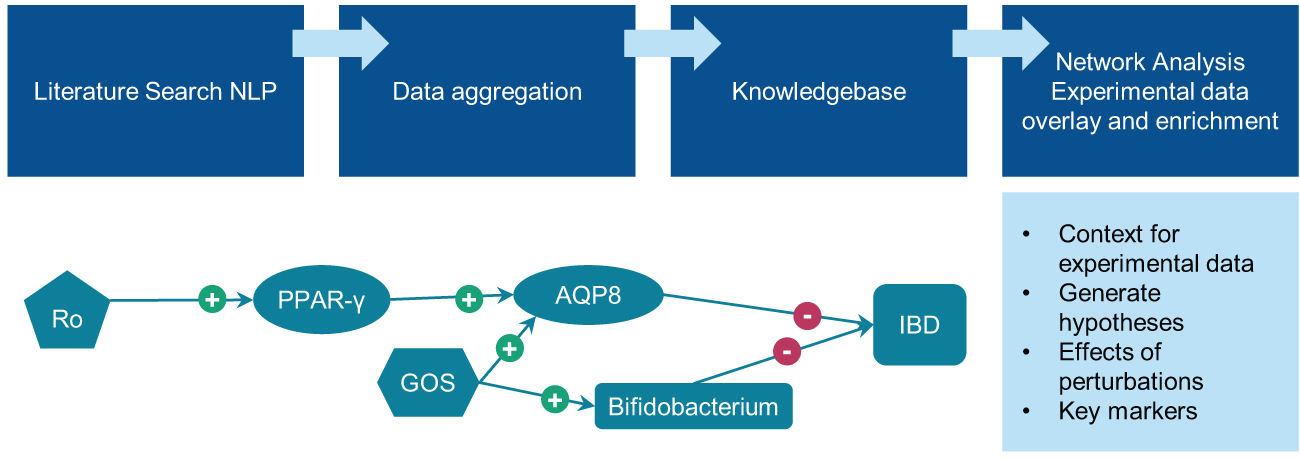
In addition to involvement in biological pathways associated with the disease, a successful drug target needs to be amenable to therapeutic modulation, have a good safety profile, and be efficacious in the clinic. Syngene’s Target Assessment offering combines data, informatics, and knowledge to address these questions and enable informed target selection. Knowledge graphs around the therapeutic area of interest help establish relationships, identify key pathways and networks, and understand the mechanism of action (MOA) to elucidate the role of a target in disease. The knowledge graph combines multi-omic data with clinical evidence and published information over the disease interaction subnetwork. It generates mechanistic hypotheses, identifies key markers, and helps build disease models.
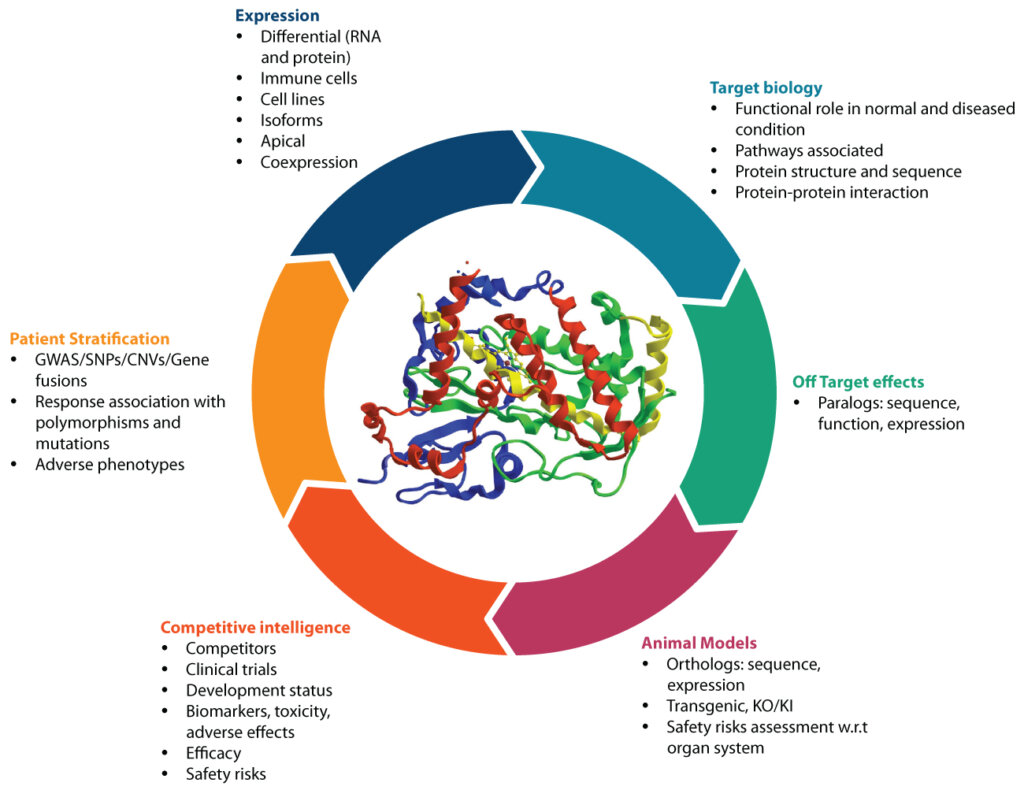
Druggability of a target for a small molecule approach means having a suitable site that can be targeted to achieve the therapeutic effect. For biologics, the target should have unique, accessible epitopes for binding. The analysis of binding sites and epitopes helps in assessing druggability. Target disposition looks at a target’s position in the protein network (on-target, downstream effects), conservation (animal model selection), and variation in the population (efficacy). Paralogs of the target are an indicator of potential off-target toxicity. Potential targets for a therapeutic program can then be prioritized based on multiparameter scoring that follows the SWOT analysis approach.
In this approach, you first look at the specifics of the target itself (strengths and weaknesses) and then place those into the broader context of competing targets and the overall clinical landscape (opportunities and threats). The expression of targets in the tissue of interest is important for efficacy and specificity. Profiling tissue expression at the protein and RNA level indicates where the target is expressed and active in the body. Information about available animal models (transgenic/knock-in/knock-out) helps plan studies, and also provides insights on the effect of modulating the target in the tissue of interest. Competitive analysis of a target, highlights white space around the target, and reveals whether any previous program failed due to safety and efficacy reasons. This is an important factor in decision making. These insights are compiled into a target dossier that is a compendium of structural, functional, pharmacogenomic, and safety aspects of a target.
Benefits of Syngene’s Target Assessment services
Syngene’s target assessment services help in the following:
• Early assessment of the mechanism, engagement, and safety associated with targets
• Prioritizing targets in a therapeutic area considering multiple parameters
• Suggesting optimal modalities for a target
• Enabling critical go/no-go decision-making
• Designing a screening tree for validation and risk mitigation
• Repositioning targets for human as well as animal health
In addition, the target dossier can be a live document, growing as the project progresses to serve as a reference document, plan ahead for
key studies, and enable data-driven risk-benefit assessments for decisions at each stage
Conclusion
Target identification is the first step in the drug discovery process. There are many factors that go into ensuring a target’s role in a disease, translates into clinical success. In addition to modulating disease, a good target should be druggable, efficacious, safe, and clinically and commercially viable. The power of informatics-driven target assessment lies in identifying shared insights across multiple technologies and heterogeneous information. Holistic assessments of targets at the start of a program enable informed decisions about which drug targets to take forward and help reduce late-stage attrition.
About the Author