



Syngene Capabilities: Nucleic Acid Therapeutics Discovery Platform− From Design to High-Quality Oligonucleotides
Home » Whitepapers » Syngene Capabilities: Nucleic Acid Therapeutics Discovery Platform− From Design to High-Quality Oligonucleotides
Executive Summary
Nucleic acid therapeutics have moved well beyond proof of concept. Their appeal is clear: they can intervene at the level of RNA or gene expression, including targets that are difficult to address with conventional small molecules or antibodies. This broad field includes small interfering RNA, aptamers, and other oligonucleotide-based approaches, where discovery success depends on early control of design, modification, purification, and analytical quality. Most approved nucleic acid drugs remain concentrated in rare and genetic diseases, but programs are expanding into cardiometabolic, neurological, immunological, infectious, and oncological indications. That expansion changes the ASO discovery and development question. It is no longer enough to show that a sequence can bind its target or alter expression in a research setting. Discovery teams must establish that the molecule can be synthesized reproducibly, purified to a defensible specification, characterized with orthogonal methods, and scaled without changing the impurity pattern. These demands become harder as sequences grow longer and incorporate mixed backbones, modified sugars, altered bases, or targeting ligands. Herein, we discuss chemistry-driven approaches, which include sequence design, chemical modification strategies, purification, analytical characterization, and scale-up of nucleic acid therapeutics.
We also highlight Syngene’s capabilities across solid-phase oligonucleotide synthesis, advanced chemical modifications, purification, and analytical characterization. These capabilities are exemplified through case studies involving a mixed-backbone gapmer antisense oligonucleotide (ASO) and an approximately 40-nucleotide aptamer, both successfully synthesized and purified to >95% purity.
Introduction: discovery challenges in nucleic acid therapeutics
Nucleic acid therapeutics (NATs), also known as RNA- or gene-based medicines, are an emerging class of treatments that target diseases at their genetic root. Their appeal lies in their ability to broaden the scope of medical intervention to diseases and disorders that are difficult to address using conventional small-molecule drugs or biologics. They have already begun to make a significant impact, particularly in the treatment of rare and inherited disorders, and are increasingly expanding their role into cardio-metabolic, neurological, immunological, infectious, and oncological diseases. These medicines use small pieces of genetic material to control how genes work, helping to reduce harmful proteins, increase beneficial proteins, or stimulate the immune system. Developing NAT therapies is challenging because they are easily broken down in the body, have difficulty in entering cells, and can sometimes trigger unwanted immune reactions. To overcome these challenges, scientists modify the building blocks of these medicines to make them more stable, effective, and longer-lasting in the body. These improvements help the therapies reach their targets more efficiently, but they also make the manufacturing process much more complex. Most nucleic acid medicines are given by injection and therefore must meet very high-quality standards. Producing these medicines is challenging because they are assembled one building block at a time. If a building block fails to attach correctly at any step, it can still participate in later steps, leading to the formation of unwanted by-products and impurities. As a result, the longer and more complex the molecule, the greater the risk of impurity formation during manufacturing. The use of specially modified building blocks, while essential for improving performance, adds further complexity to production. The finished molecule is therefore the result of hundreds of linked chemical events, not a simple string of bases. As a result, making and testing high-purity nucleic acid therapeutics is one of the most critical and challenging aspects of developing these innovative medicines.
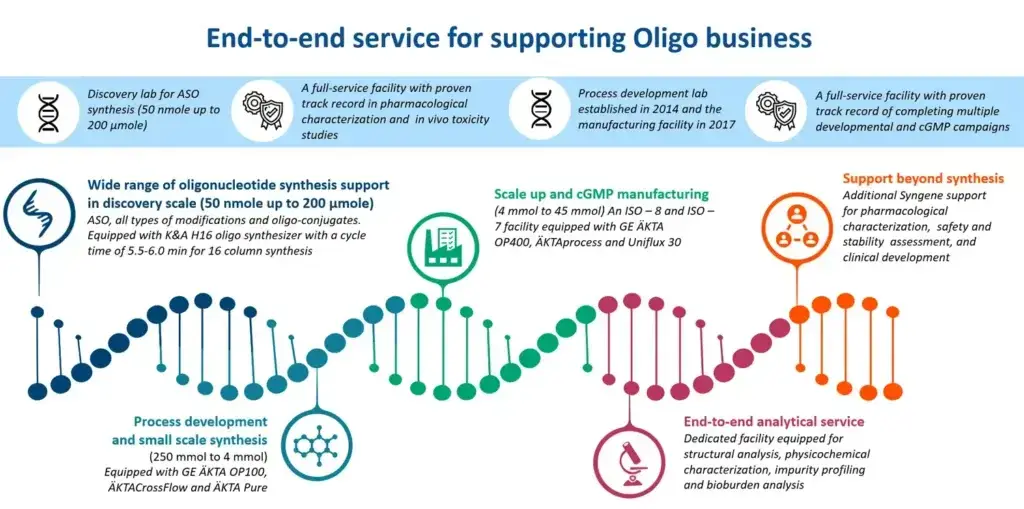
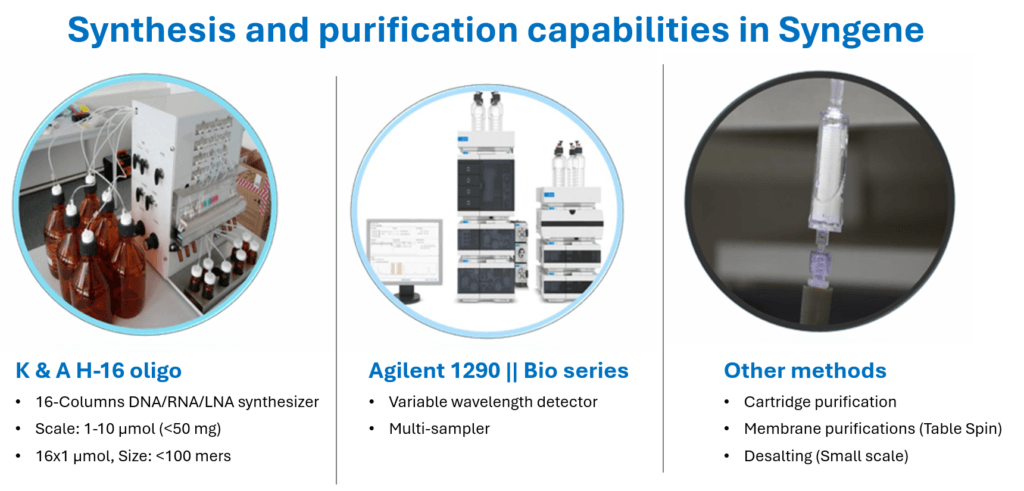
In this context, Syngene’ s advanced synthesis capabilities play a pivotal role in accelerating NATs development by leveraging expertise in solid-phase oligonucleotide synthesis, incorporation of complex chemical modifications, and robust purification workflows. These capabilities, combined with strong analytical support, enable the efficient generation of high-quality oligonucleotides, thereby supporting faster progression from discovery to development.
Syngene Capabilities for Nucleic Acid Therapeutics Discovery and Collaborative Expertise
The successful development of NATs requires expertise in sequence design, chemical synthesis, and molecular modification to achieve optimal efficacy, safety, and scalability. Syngene offers fully integrated, end-to-end oligonucleotide solutions designed to support every phase of the therapeutic roadmap. Syngene delivers premium-grade oligonucleotides by integrating advanced synthesis technologies with deep scientific expertise, consistently meeting the stringent demands of complex therapeutic applications.
Syngene brings extensive experience across a broad spectrum of oligonucleotide modalities, including Antisense Oligonucleotides (ASOs), small interfering RNA (siRNA), etc. Recent successes include the synthesis of gapmer ASOs incorporating mixed backbone architectures. These efforts demonstrate our ability to seamlessly integrate phosphorothioate (PS) and phosphodiester (PO) linkages with advanced modifications such as phosphoramidate (PN) and phosphorodithioate (PS2).
Furthermore, Syngene has established strong capabilities in conjugation chemistry, enabling the efficient attachment of oligonucleotides to diverse functional moieties, including lipids, fluorophores, and custom-designed linkers. Together, these strengths position Syngene as a trusted partner for the development of next-generation oligonucleotide therapeutics.
Case Study 1: Gapmer ASO
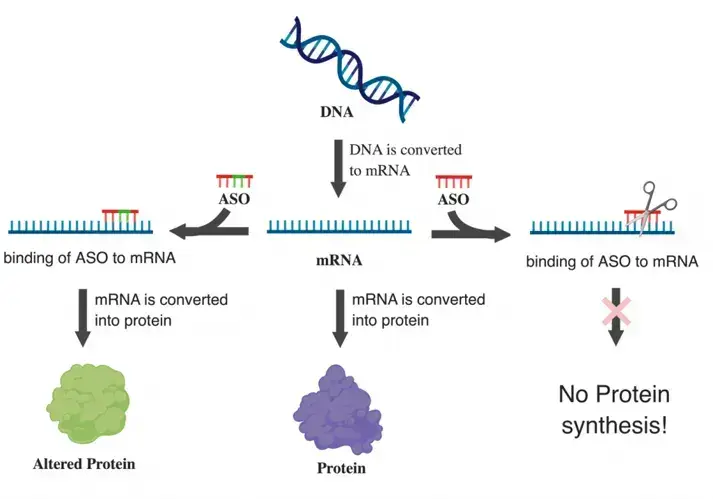
Gapmer antisense oligonucleotides (ASOs) feature a central DNA core flanked by modified RNA, recruiting RNase H1 to cleave target mRNA and suppress translation. This study reports the synthesis of a complex 20-nucleotide gapmer containing terminal 2′-MOE modifications, site-specific 5-methylcytosine (5-MeC) bases, and mixed phosphorothioate/phosphodiester (PS/PO) backbone linkages. This achievement highlights our ability to meet demanding design specifications while consistently delivering high-quality oligonucleotides with purity exceeding 95% (Figure 1)
Case Study 2: Aptamer Discovery Support
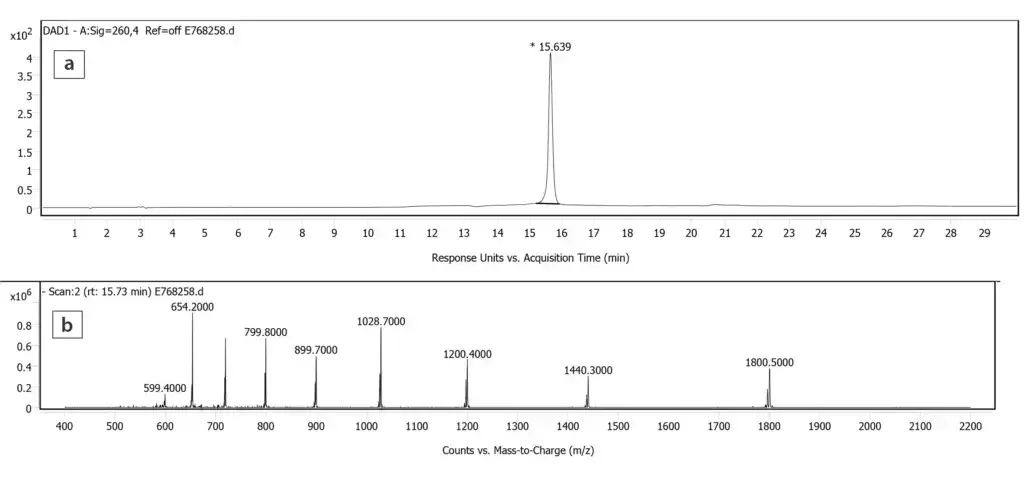
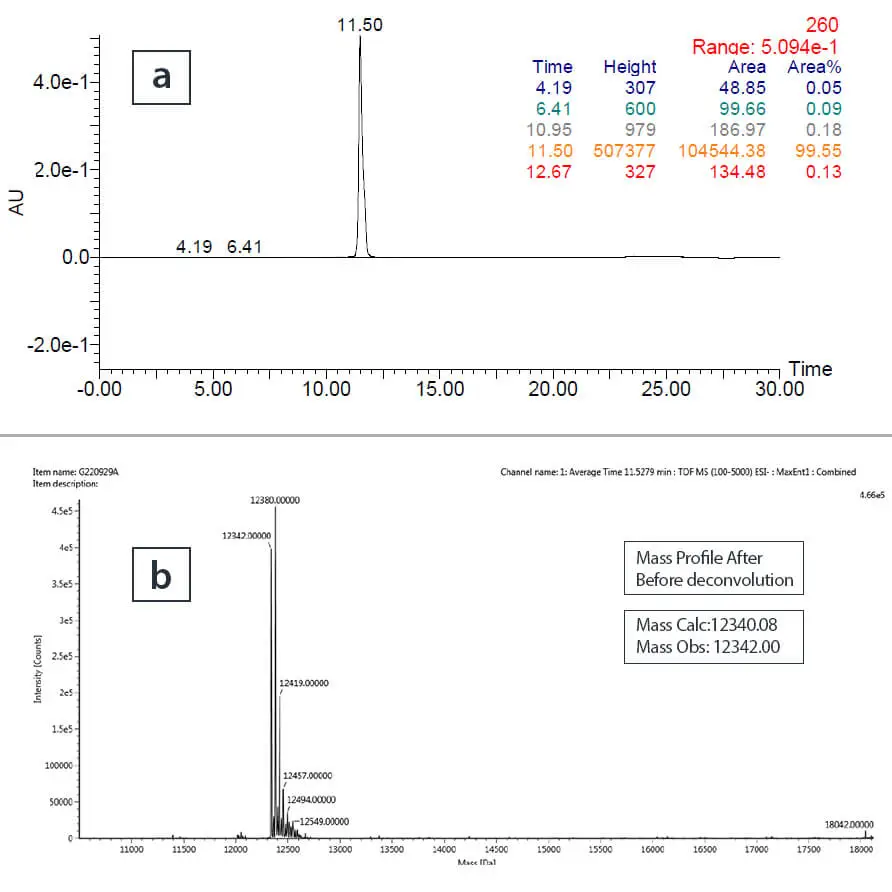
Aptamers are short single–stranded DNA or RNA molecules selected via Systematic Evolution of Ligands by Exponential Enrichment (SELEX) for highly specific target binding. Although they can be synthesized chemically, longer sequences increase synthesis errors, affecting yield, purity, and scalability. Common impurities include truncated species (n–1, n–2), as well as side reactions such as depurination, branching, and other chemical modifications, all of which complicate both synthesis and purification of the desired product. In a recent case study, the Syngene team successfully delivered an aptamer of approximately 40 nucleotides with a purity exceeding 95%. This achievement highlights our ability to overcome key synthetic challenges and reliably produce longer, high–quality oligonucleotide sequences (Figure 2).
References
- Liu M, Wang Y, Zhang Y, Hu D, Tang L, Zhou B, Yang L. Landscape of small nucleic acid therapeutics: moving from the bench to the clinic as next-generation medicines. Signal Transduct Target Ther. 2025;10:73. doi:10.1038/s41392-024-02112-8
- Sun X, Setrerrahmane S, Li C, Hu J, Xu H. Nucleic acid drugs: recent progress and future perspectives. Signal Transduct Target Ther. 2024;9:316. doi:10.1038/s41392-024-02035-4
- Roberts TC, Langer R, Wood MJA. Advances in oligonucleotide drug delivery. Nat Rev Drug Discov. 2020;19:673–694. doi:10.1038/s41573-020-0075-7
- Figure 1. Mechanism of antisense oligonucleotides (ASOs). Adapted from Snapshot: What is an antisense oligonucleotide (ASO/AON)? National Ataxia Foundation (SCAsource), September 9, 2022. https://www.ataxia.org/scasourceposts/snapshot-what-is-an-antisense-oligonucleotide-aso-aon/ (accessed July 16, 2026).
Authors:
Dr Nitin D. Bansode is a Lead Principal Scientist at Syngene and a research professional specializing in oligonucleotide chemistry. Over the past five years, he has successfully led and delivered multiple oligonucleotide research programs in collaboration with industry partners. He earned his Ph.D. in Oligonucleotide Chemistry from IISER Pune, India, and completed four years of postdoctoral research at the University of Bordeaux, France.
Murtuza Hadianawala (HM) is a medicinal chemist with over a decade of experience in the design and synthesis of molecules for drug discovery. He has led multiple drug discovery programs as a project leader and possesses strong expertise in medicinal chemistry and lead optimization. Murtuza holds a graduate and master’s degrees in pharmacy, along with a Ph.D. in Medicinal Chemistry.
Dr. Prashant R. Latthe is Director of Discovery Chemistry at Syngene International Limited, Bengaluru, with nearly two decades of experience in small molecule drug discovery. An expert in heterocyclic synthesis, SAR-driven lead optimization, and translational chemistry, he leads programs for global pharmaceutical partners. He holds a Ph.D. in Organic Chemistry from Karnataka University, Dharwad, and completed his postdoctoral research at IIT Bombay.
Santoshkumar N. Patil (SNP) is AVP and Head of the Scientific Ladder, Medicinal Chemistry division at Syngene International, with over two decades of experience across pharma and CRO environments. A medicinal chemist with deep expertise in integrated drug discovery, he has collaborated extensively with global pharma, biotech companies, and academic partners. He holds a PhD in Organic Chemistry from Macquarie University, Sydney, Australia, and an M.S. Pharm from NIPER Mohali, India, with postdoctoral research at the University of Cambridge, UK.