





At a glance
For ART26.12, a first-in-class small molecule and the first selective FABP5 inhibitor to enter clinical trials, Syngene delivered a complete GLP tox study package within six months. The work covered non-GLP and GLP safety toxicology, pharmacokinetics, bioanalysis, genotoxicology, eCTD-ready reports, and SEND datasets as one integrated programme. By running these activities in parallel, the team kept the IND-enabling studies timeline aligned with Artelo Biosciences’ filing target and supported the IND regulatory submission without adding a separate compilation phase at the end.
The Client
Artelo Biosciences, Inc. is a clinical-stage pharmaceutical company dedicated to the development and commercialization of proprietary therapeutics that modulate lipid-signaling pathways. Artelo has portfolio of broadly applicable product candidates designed to address significant unmet needs across anorexia, cancer, anxiety, dermatologic conditions, pain and inflammation.
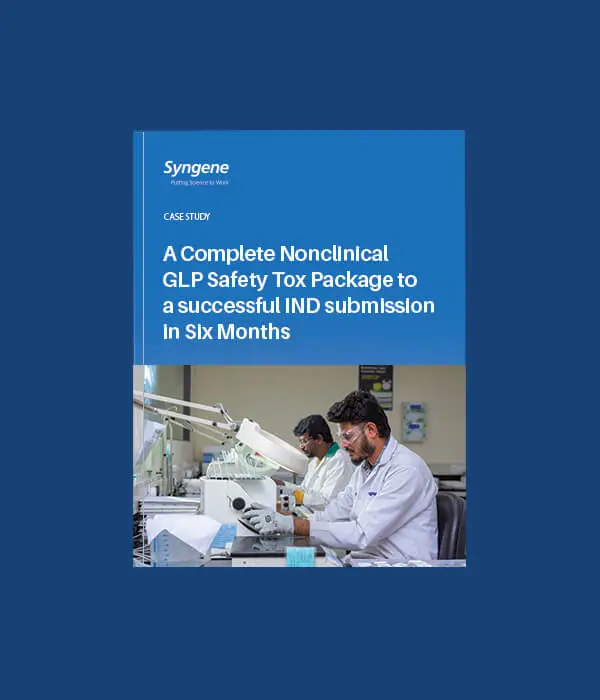
The challenge: An IND regulatory submission for ART26.12, a FABP5 inhibitor
An Investigational New Drug (IND) application to the US FDA is a complex, high-stakes milestone. Delays in IND-enabling studies, fragmented data compilation and regulatory formatting errors can push timelines back by months shifting capital plans and delaying first-in-human (FIH) trials.
ART26.12 is the lead compound in Artelo’s proprietary Fatty Acid Binding Protein (FABP) platform and the first selective FABP5 inhibitor with a promising mechanism of action for the management of painful neuropathies.
Following due diligence and a review of Syngene’ s Safety Assessment capabilities, Artelo was prepared to place the entire nonclinical package with Syngene provided that the non-GLP and GLP safety toxicology program, including the eCTD and SEND datasets, to be completed within six months. That single constraint defined the program.
The Solution
Three Synchronous Tracks, One Program
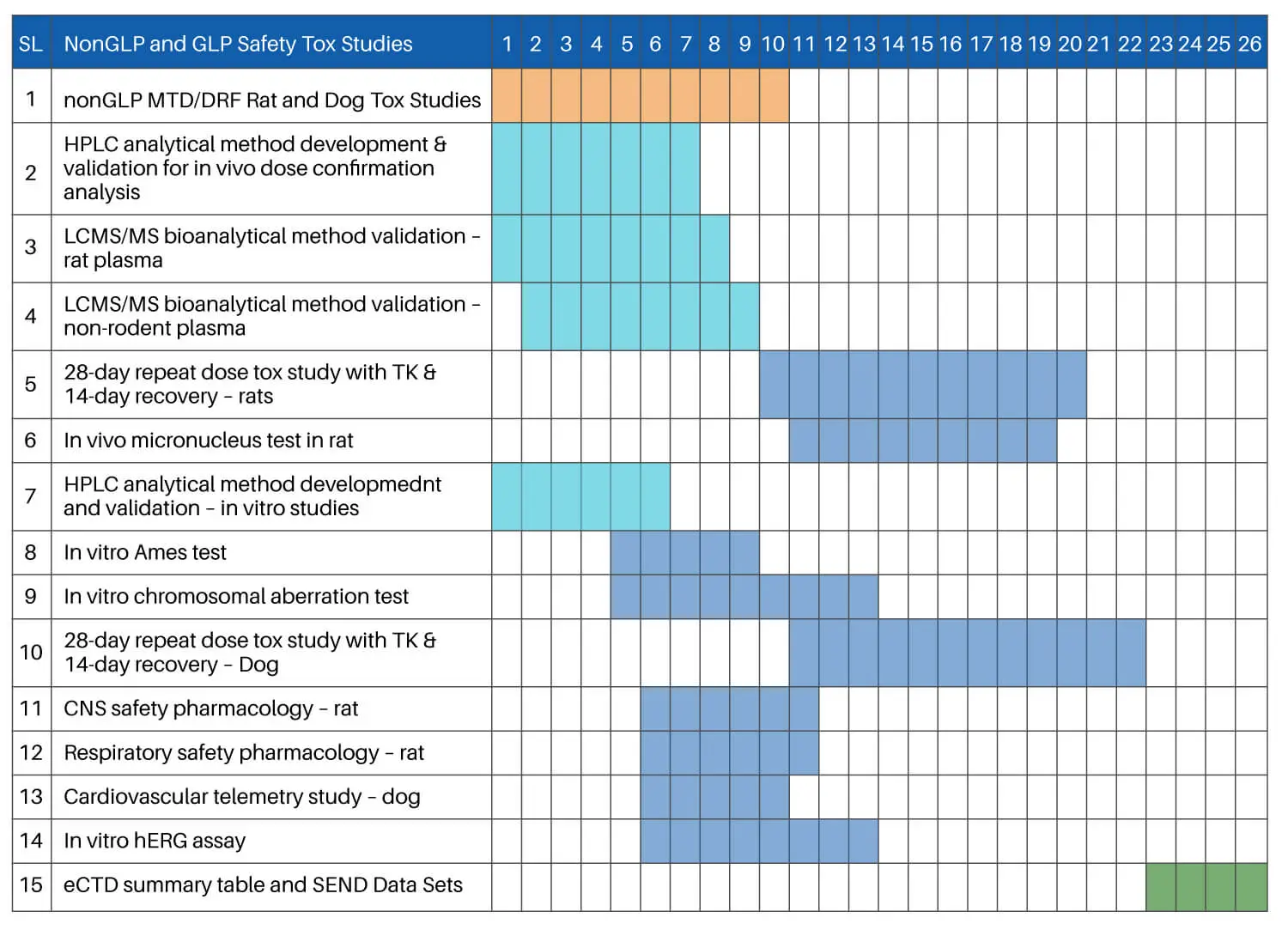
A nonclinical package is conventionally run in sequence analytical and bioanalytical set-up and validations first, safety tox in concurrent, regulatory datasets compiled at the end. Syngene’ s safety assessment team organized the program around dependency rather than department: only the work that genuinely had to wait was sequenced, and everything else ran concurrently across three synchronized tracks under a single project management structure.
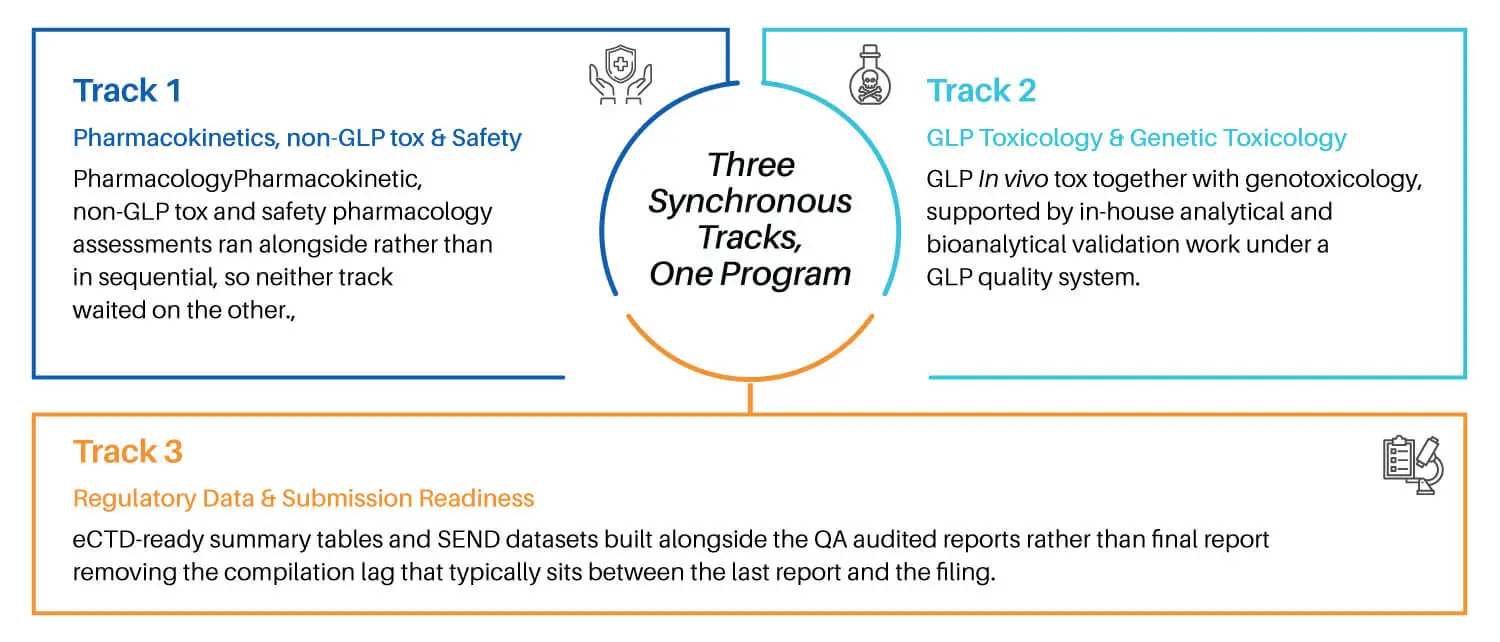
The Six-Month IND-Enabling Studies Timeline at a Glance
The three tracks ran concurrently across the six-month window, with study reports, bioanalysis and regulatory datasets progressing in step rather than in sequence.
The Outcome For ART26.12
Delivered ahead of schedule. Filed on time. Approved by the FDA.
The complete non-clinical package was delivered within the six-month window, with study reports reaching the client well ahead of the expected submission date. Artelo pointed to four things in particular: the depth of Syngene’ s toxicology expertise, the turnaround itself, the speed of response whenever a query or a change arose, and the quality of the reports. Close coordination between the scientific and project management teams kept updates timely and the program moving smoothly throughout.
That head start supported the timely filing of the Investigational New Drug (IND) application for ART26.12, for the treatment of chemotherapy-induced peripheral neuropathy (CIPN). FDA clearance of the IND enabled the Company to initiate its first-in-human Phase 1 single ascending dose study — the milestone the entire six-month program was built around.
“Syngene’ s scientific expertise, responsiveness and partnership-driven approach were instrumental in advancing our IND program. From delivering a high-quality GLP safety tox package to providing rapid support during FDA review, the team consistently demonstrated the agility and commitment needed to keep our program on track. Throughout the engagement, Syngene acted as a true extension of our team, helping us successfully progress toward clinical development”.
— Artelo Biosciences, Inc.
Bringing the Same Approach to Your Program
The six-month result did not come from compressing studies. It came from running toxicology, bioanalysis and regulatory data generation as one integrated program, from building the eCTD and SEND deliverables during the studies rather than after them, and from a single accountable team owning the package end to end. Sponsors working to a fixed IND date get the same program design, the same in-house scientific bench and the same project management discipline that kept ART26.12 on schedule.