





End-to-end expertise in induced proximity drug discovery, development, formulation and manufacturing
Induced proximity therapeutics bring selected proteins together to change their function or fate. Some approaches promote protein degradation, while others stabilise proteins or alter their activity. Syngene supports programs involving PROTACs, molecular glues, DUBTACs and RIPTACs, from target assessment through discovery and development.
Many heterobifunctional molecules used in induced proximity drug discovery fall within beyond-Rule-of-Five (bRo5) chemical space. Their properties and mechanisms call for specialist support across computer-aided drug design (CADD), chemistry, pharmacology and drug metabolism and pharmacokinetics (DMPK). Molecular glues have a different architecture and should not be treated as heterobifunctional bRo5 compounds. An integrated team can support challenging targets from discovery through development.
With 450+ dedicated induced proximity scientists and more than 15 global clients, we have supported clients’ induced proximity programs for more than nine years. Our discovery team has successfully identified hits and leads across several projects, including programs that have moved into preclinical development through collaborative work.
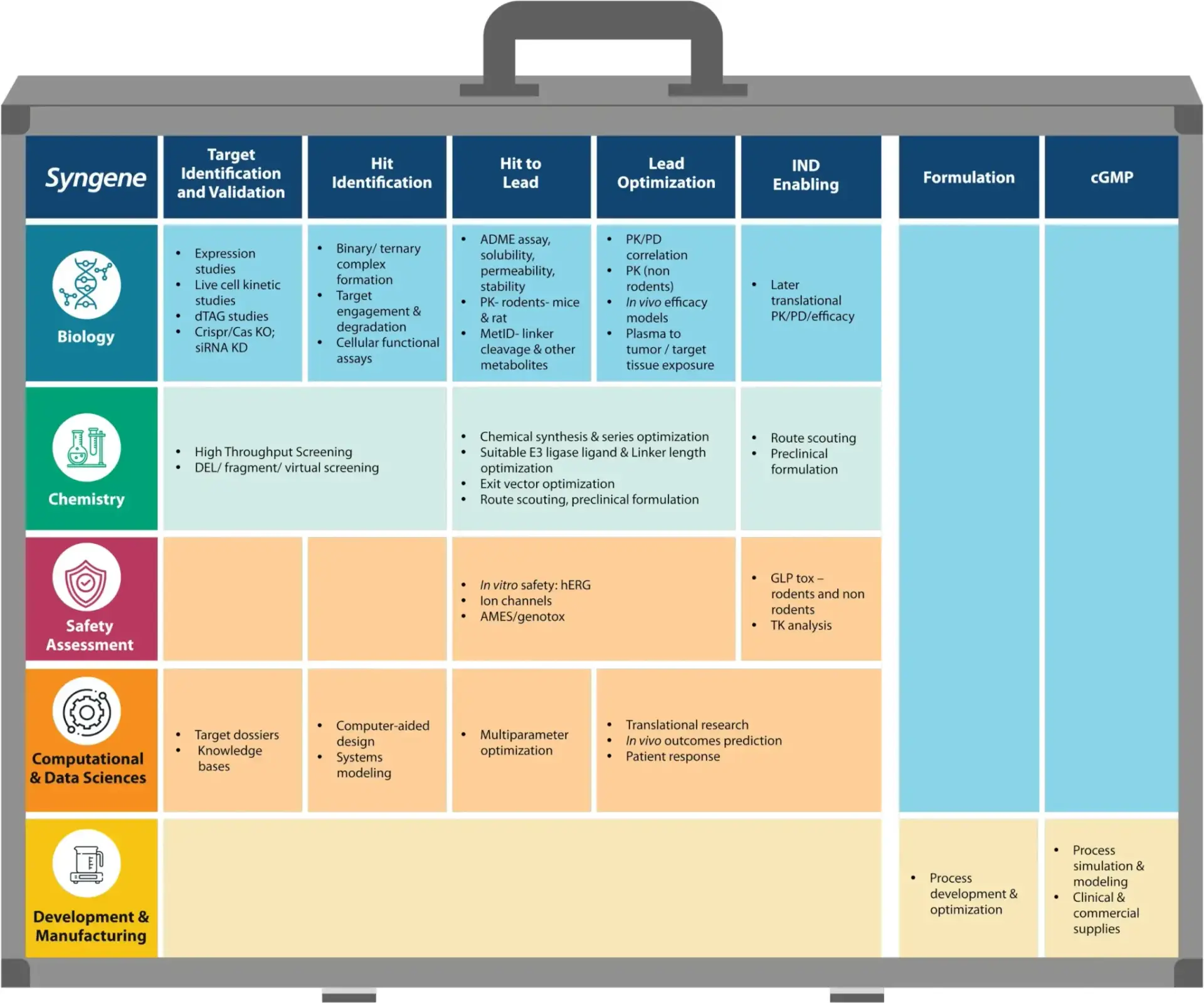
Our end-to-end induced proximity therapeutics solutions
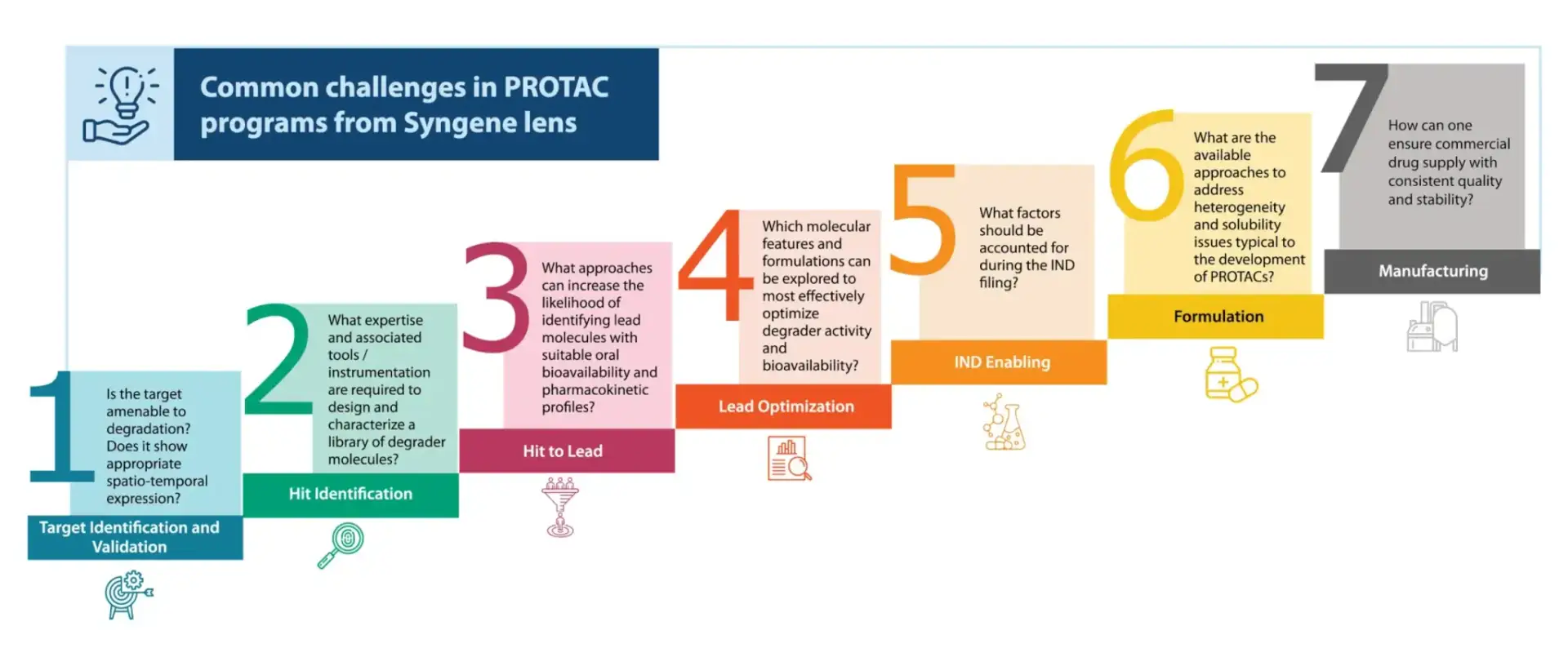
1. Target evaluation for induced proximity drug discovery
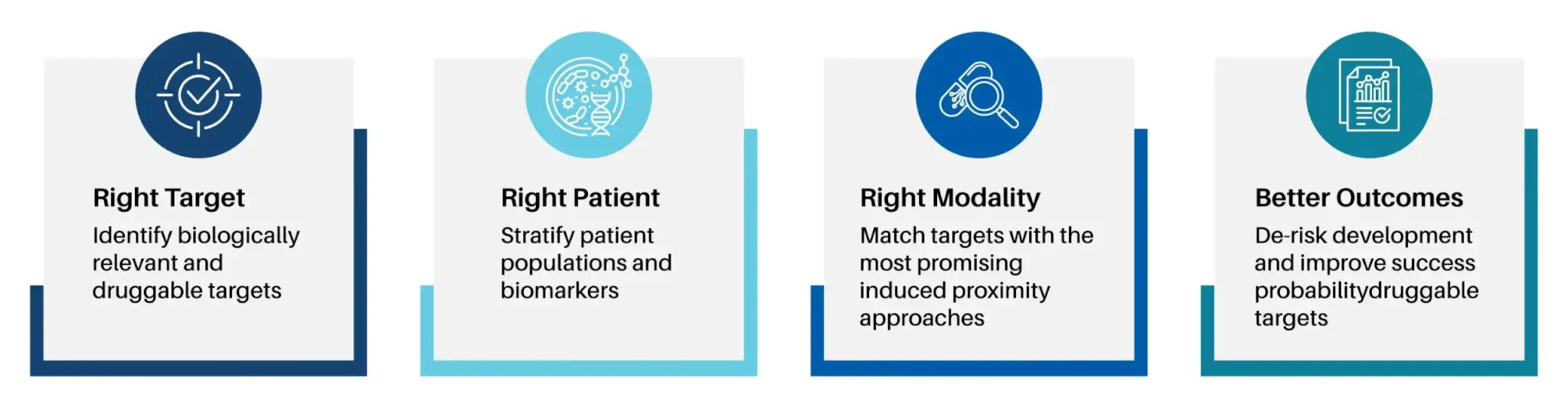
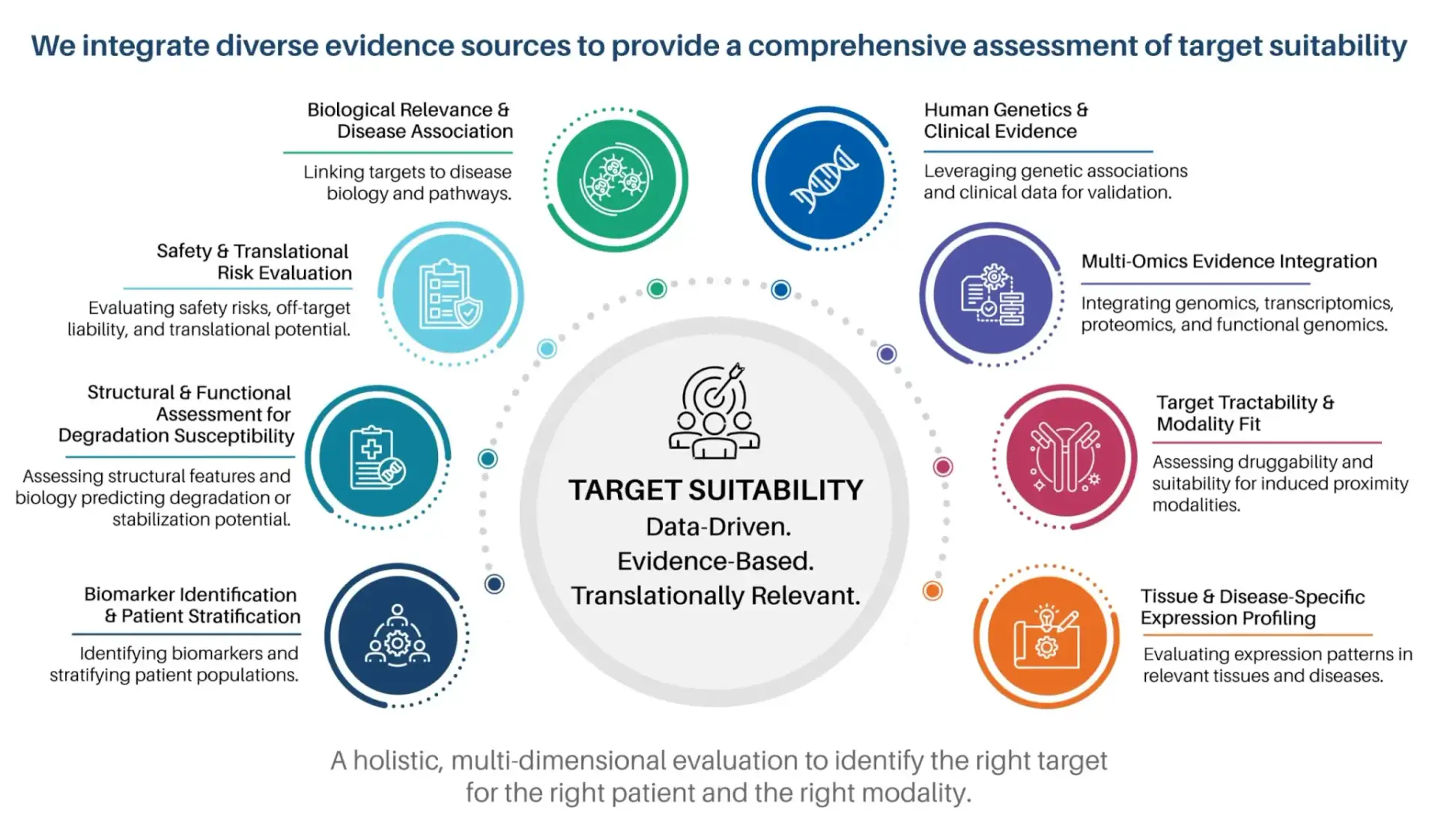
Target selection for induced proximity therapeutics starts with disease biology and patient population. We integrate genomic, transcriptomic, proteomic, functional genomics and clinical data to assess suitability for degradation, stabilisation or activity modulation. We assess relevance, tractability, disease linkage, expression, genetic support and translational potential. Target dossiers, safety reviews and network analyses bring evidence together and highlight gaps. This evidence informs target and modality choices, and shows what data a program still needs.
2. Our evaluation framework:
3. Target validation and RIPTAC technology selection
Target evaluation establishes the rationale; experimental validation tests whether the intervention produces the intended effect in relevant models.
Modality choice depends on biology and the therapeutic window. For molecular glues, structural information and modelling can guide design. In vitro testing should show that compound-induced target–E3 ligase interactions lead to degradation and the intended cellular response.
The PROTAC therapeutic window depends on degradation effects, extent and duration, exposure, and tissue-specific E3 ligase expression. Degrader–antibody conjugates (DACs) may target antigen-expressing cells; demonstrate this benefit for each construct.
RIPTAC technology uses differences in target protein expression. The target (TP), RIPTAC and essential effector protein (EP) form a ternary complex that can impair EP function. The aim is greater cytotoxicity in high-TP cancer cells, but selectivity must be tested; lower TP expression alone does not show normal cells will be spared.
DUBTACs recruit a deubiquitinase to stabilise a selected protein. Validation should show increased protein abundance and retention or restoration of its relevant function.
Our multidisciplinary team spans computational and structural biology, biophysics, biochemistry, pharmacology and translational sciences. It helps select among molecular glues, PROTACs, RIPTACs, DUBTACs and emerging approaches.
Capabilities include:
i. Translational informatics and CADD
- DepMap, GWAS and multi-omics analyses assess disease relevance and target dependency.
- Spatio-temporal expression profiling of targets and effectors, including E3 ligases and deubiquitinases.
- Molecular simulation, pocket prediction, solvent accessibility and ligand interaction analysis.
- Binary complex analysis guides attachment points and linker length.
- Linker and ternary complex stability assessment.
- Linker exploration and assessment of predicted ternary complex stability.
ii. Molecular biology and cell engineering
- Vectors and cell lines support loss-of-function (shRNA, CRISPR) and gain-of-function studies.
- dTAG and HaloTag systems support validation and mechanism studies; confirm findings in relevant endogenous models where feasible.
iii. Biology
- Biochemical, biophysical and cell assays assess binary engagement, ternary complex formation and mechanism.
- Cytotoxicity and functional assays fit the mechanism and disease context.
4. Hit identification
Computational drug discovery for protein degradation
Targeted protein degradation in induced proximity drug discovery uses computational analysis of warheads, exit vectors, target–E3 interactions, linkers and ternary complexes. Molecular dynamics can guide optimisation, alongside experimental results.
Medicinal chemistry
Medicinal chemistry starts with a suitable ligand for the protein of interest (POI) and an exit vector that allows linker attachment while retaining target binding.
For PROTACs, linker-enabled POI ligands are screened with SynTACS™ E3 ligase building blocks and linker libraries. This dual-targeting approach explores recruiter, linker and attachment-point combinations to identify molecules for a PROTAC development program and PROTACs in drug discovery.
The modular approach supports hit identification. RIPTAC and DUBTAC ligands and assays must fit the mechanism. Molecular glues use a distinct architecture.
Assay biology
In vitro assay data guide structure–activity relationship (SAR) analysis and medicinal chemistry iterations. Assay selection reflects the target, recruited effector and intended outcome. Biochemical and cell-based tests assess binding, ternary complex formation and function together; no single measure is enough to show a productive mechanism.
DMPK
Many heterobifunctional molecules occupy bRo5 space and need adapted assays to assess developability. Our DMPK team develops and optimises in vitro absorption, distribution, metabolism and excretion (ADME) assays and preclinical formulations.
Studies cover solubility, chromatographic log D, permeability, stability, and plasma and tissue binding. Formulation supports rodent PK; nonrodent studies fit the program’s science and regulatory needs. Cassette dosing design may be considered where appropriate.
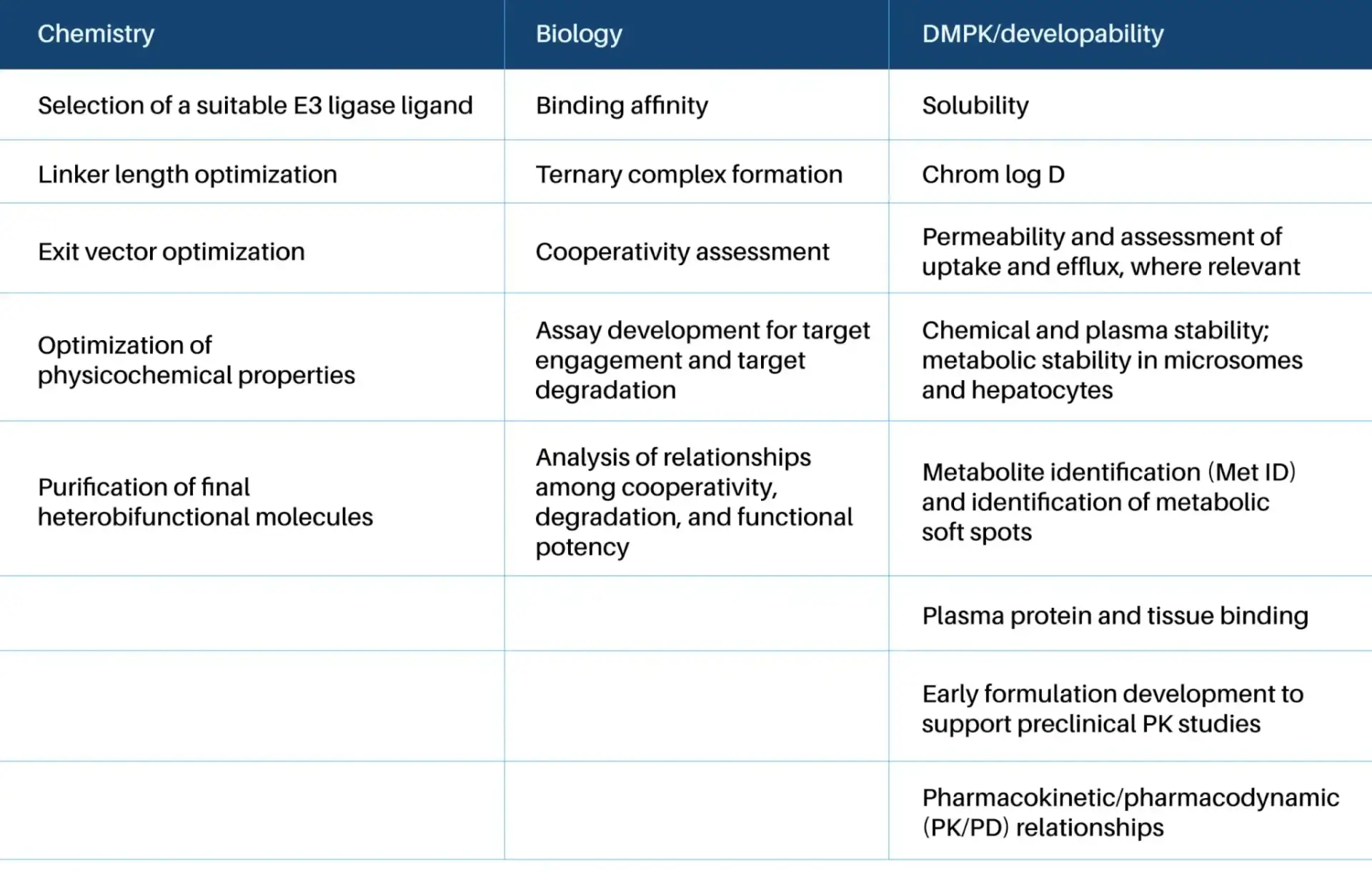
For PROTAC programs, activities link chemistry, biology and DMPK:
Direct-to-Biology
Direct-to-Biology combines PROTAC tools, computational design, engineered systems and high-throughput pharmacology for early feasibility and discovery. It can reduce initial synthesis and purification, assess target degradability and identify E3 ligase–linker combinations. Confirm results with purified compounds before detailed SAR analysis or lead selection.
Integrated heterobifunctional discovery platform
- Linkers spanning flexible to constrained designs.
- Coupling-ready partial PROTACs with CRBN and VHL recruiters.
- Computational modelling of binding, exit vectors, linkers and ternary complexes.
- Recombinant target and E3 ligase production.
- Custom cell models through molecular biology and cell engineering.
- High-throughput biochemical, biophysical, cell and ADME screening.
- Integrated design–make–test–analyse workflow.
5. Hit-to-lead and lead optimisation
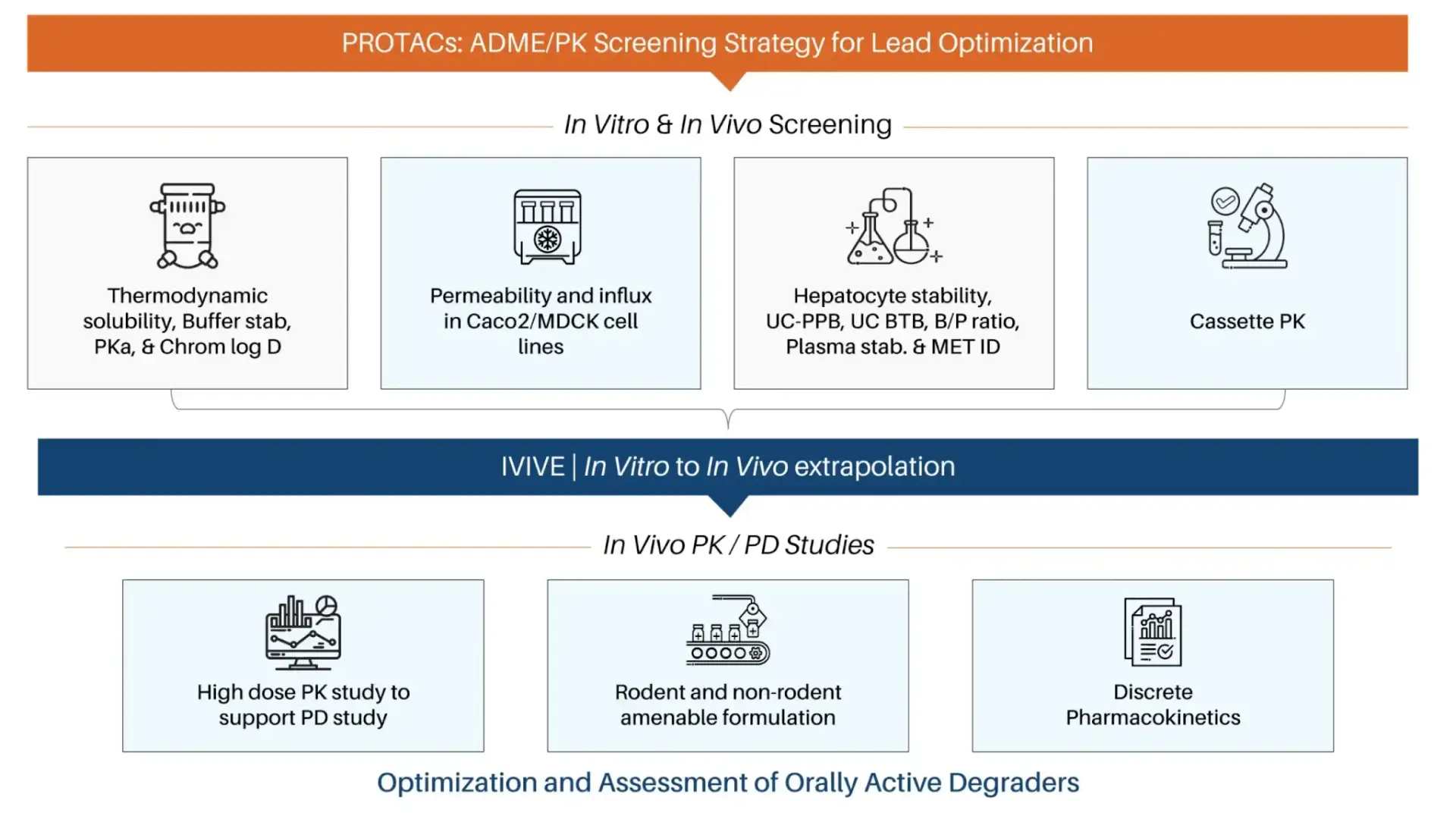
We advance confirmed hits by reviewing chemistry, activity, exposure and early safety together. Services include:
- ADME assays for solubility, lipophilicity, permeability, stability and CYP interactions.
- Rodent and, where appropriate, nonrodent PK studies.
- Metabolite identification, including linker cleavage, to identify metabolic soft spots and guide chemical changes.
- Chemical synthesis and series optimisation; E3 ligase ligand and linker selection.
- Exit vector optimisation.
- In vitro safety, including hERG and other relevant ion channel assays.
- Ames and other genotoxicity assessments, as appropriate.
6. IND-enabling studies
Our safety team assesses candidates using in vitro assays and appropriate rodent and nonrodent studies. The team also supports IND submissions and questions on the nonclinical package.
Services include:
- Dose-range-finding toxicity studies in rodents and nonrodents.
- Bioanalysis and GLP bioanalysis.
- GLP toxicity studies in rodents and nonrodents.
- Standard for Exchange of Nonclinical Data (SEND) services.
Study design and species selection should reflect candidate pharmacology, target and effector biology, and the intended regulatory submission.
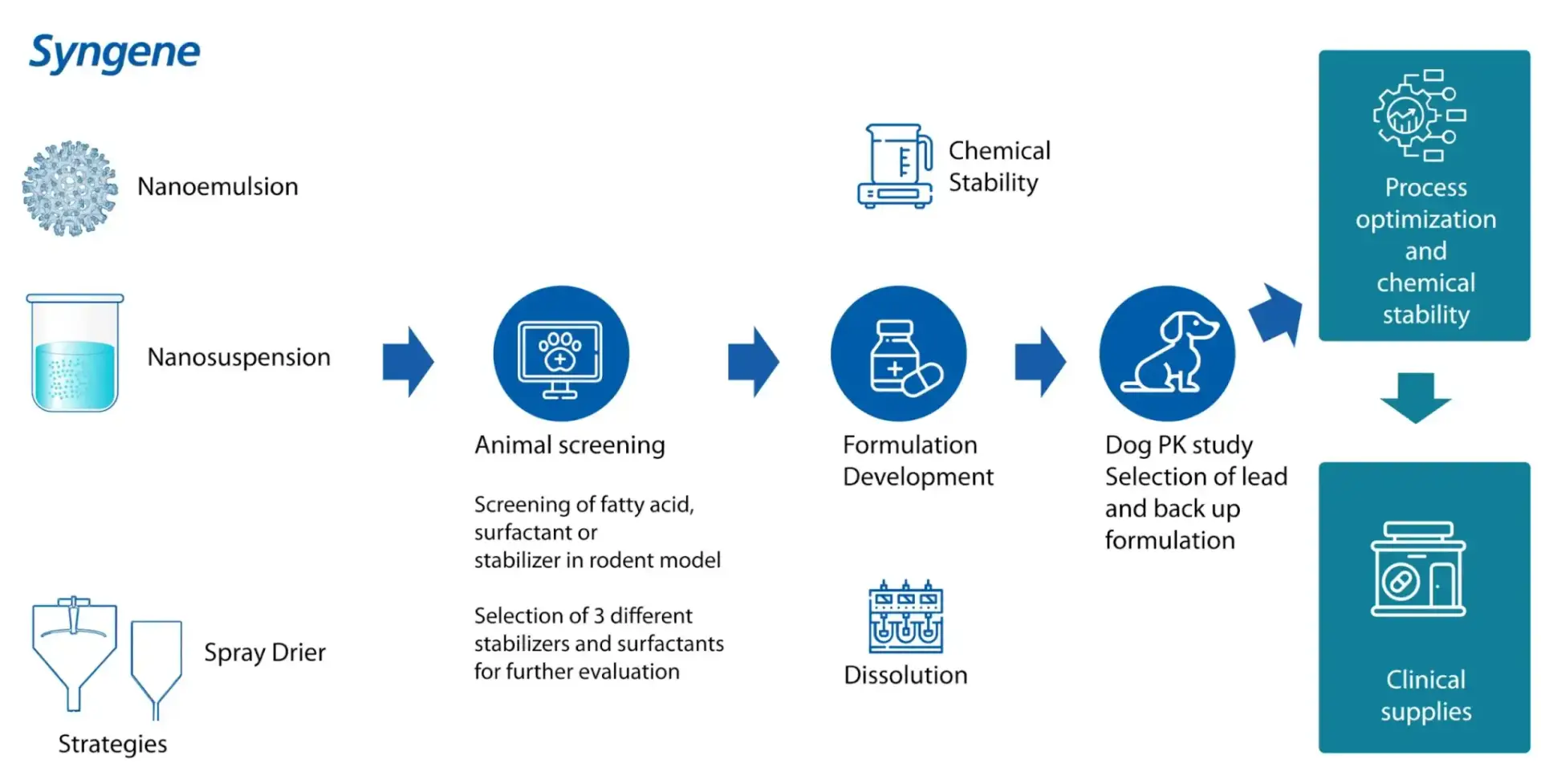
7. Formulation development
Formulation is selected for compound properties, route and stage. It may address solubility and dissolution, but not fully overcome poor intrinsic permeability.
- Conventional dosage forms: tablets, capsules, powders or granules for reconstitution.
- Polymer systems: hydrogels, microparticles and microspheres.
- Surfactant and lipid systems: micelles, lipid nanoparticles, microemulsions and self-microemulsifying drug delivery systems (SMEDDS).
- Particle size reduction by micronisation and nanosuspensions.
- Solid dispersions prepared by spray drying.
The workflow links formulation screening with PK evaluation, process optimisation and clinical supply preparation:
8. Process development and manufacturing
As programs advance, process development and optimisation support the transition from research material to clinical and commercial supply. The end-to-end toolbox includes process simulation and modelling.
Linking process work with discovery, DMPK, safety, and formulation identifies material needs and constraints early, supporting induced proximity therapeutics programs with a practical supply strategy.
Conclusion
Induced proximity therapeutics bring together several disciplines, and decisions made early can affect the work that follows. Target biology and modality selection guide assay design and molecular optimisation, while DMPK, safety, formulation and process development help assess a candidate’s readiness to advance. Bringing these activities into a connected program can help teams identify gaps earlier and plan the next stage with a clearer view of the scientific and development requirements.