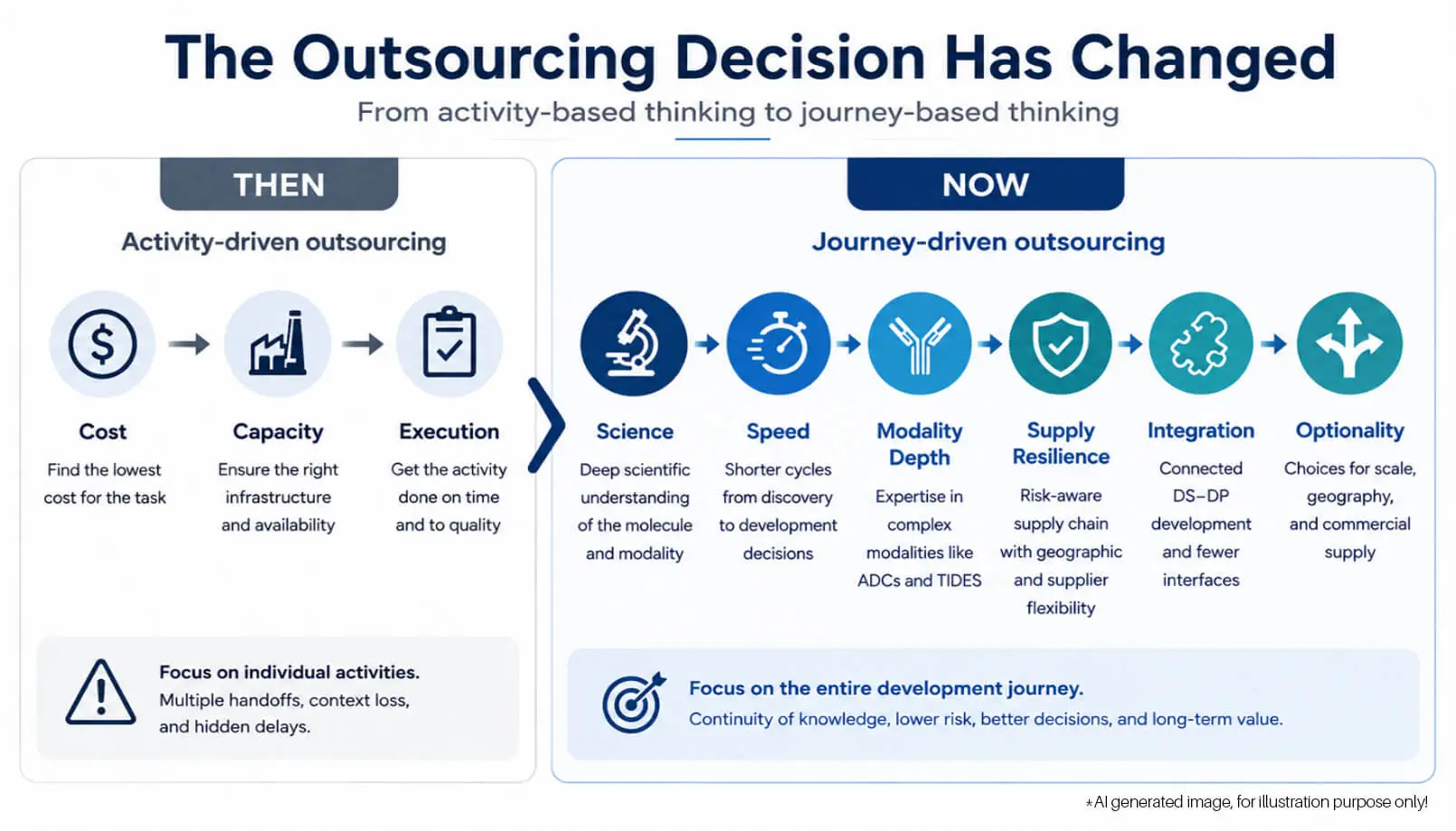







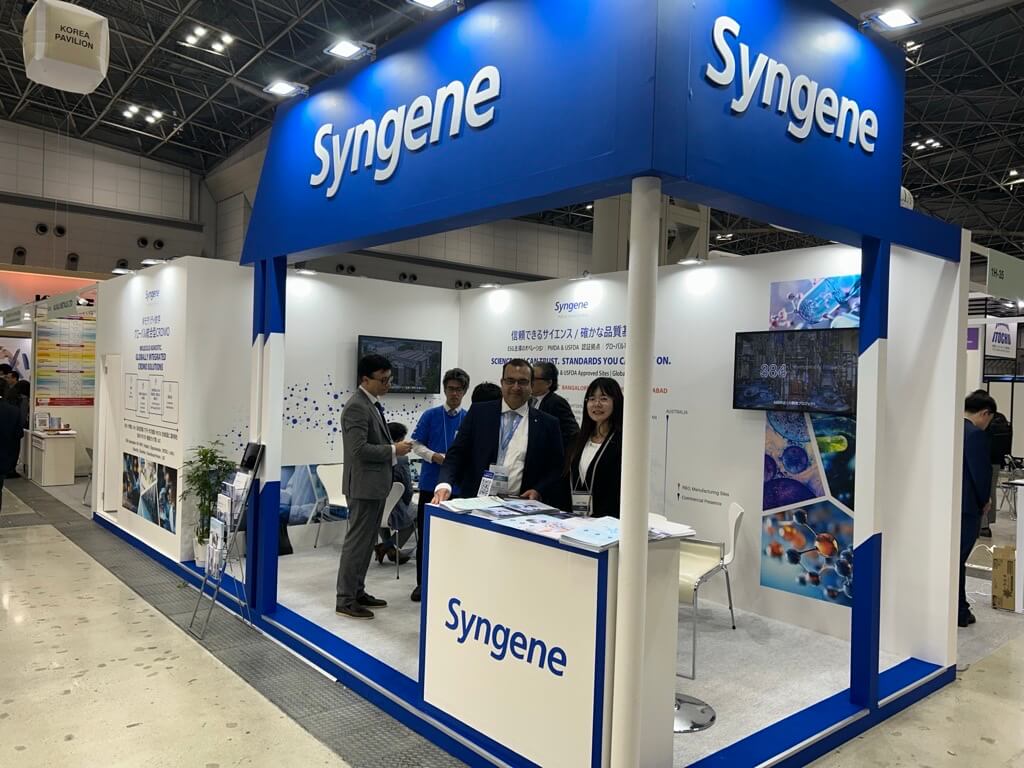
CPHI Japan 2026 made one thing clear: supply chain diversification is now changing how Japanese sponsors evaluate CDMO partners. The conversation is becoming more selective, more technical, and more evidence-led. Instead of simply asking who has capacity, customers were asking which partner can support advanced modalities, late-stage readiness, regulatory confidence, local engagement, and reliable execution across geographies.
This matters because the molecules themselves are becoming more difficult to develop and manufacture. ADCs, peptides, oligonucleotides, HPAPIs, biologics, and other complex modalities create risks that cannot be solved by capacity alone. They require technical depth, disciplined technology transfer, reliable quality systems, and clear continuity between development and manufacturing.
The stronger CDMO proposition in Japan, therefore, will not rest on cost, scale, or geography alone. It will depend on verifiable trust: the ability to show, through evidence and experience, that a partner can manage complexity without adding uncertainty.
Verifiable trust is not a relationship phrase. It is an operating standard. It means that a sponsor can examine a partner’s track record, quality behavior, technical depth, facility readiness, regulatory discipline, and cross-site execution before placing strategic work there.
Supply chain diversification is shifting the conversation from geography to governed execution
Supply chain diversification is now part of mainstream pharma thinking. Overdependence on a single manufacturing geography has become harder to defend, especially for companies managing complex assets, long development timelines, and rising supply continuity expectations.
India and the US both have relevance in this shift, but for different reasons. The US brings proximity to major biotech clusters, regulatory familiarity, and onshore manufacturing options. India brings scientific talent, chemistry depth, cost efficiency, a large technical base, and expanding capability across development and manufacturing.
But India’s opportunity in Japan cannot be built on the argument of cost. If the conversation starts with cost, it immediately invites concern about quality, reliability, and long-term commitment. The stronger argument is different. India can be valuable when it is part of a global operating model: India for scientific depth and execution scale, the US for strategic manufacturing proximity where needed, and local Japan-facing engagement for trust, continuity, and relationship building.
The real correction is this: customers are not looking for a simple replacement geography. They are looking for a better-controlled execution model. For Japan, the stronger case is a globally governed CDMO model in which each site has a clear role, quality expectations are consistent, and the sponsor can understand how risk is controlled across geographies.
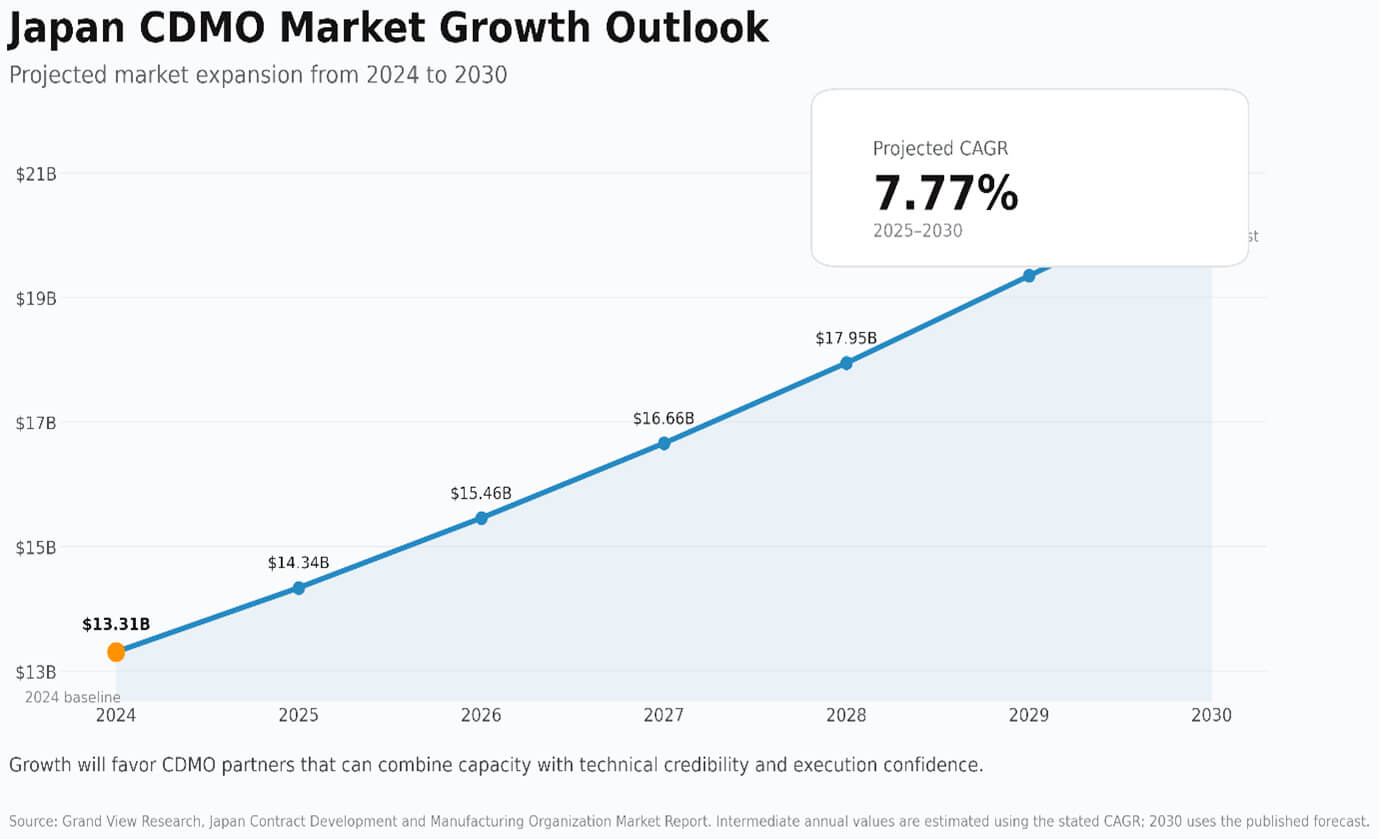
Figure 1. Japan’s CDMO market is projected to expand steadily through 2030, but growth will favor partners that can combine capacity with technical credibility and execution confidence.
Japan is not externalizing weakness. It is externalizing complexity in advanced modalities
A shallow reading of outsourcing says companies externalize work because they lack capacity or want lower costs. That view is increasingly outdated. In Japan, externalization is becoming a response to a more complex operating environment. Portfolios are changing. Cost pressure is increasing. Development timelines are tighter. Advanced modalities demand specialized expertise. Manufacturing decisions are strategic, not administrative.
Japan is also investing in domestic capability, especially in advanced therapeutic areas. Government-backed activity in regenerative medicine, cell therapy, and gene therapy shows a clear intent to strengthen local CDMO infrastructure and talent. JCR Pharmaceuticals, for example, announced selection for Japan’s Regenerative Medicine CDMO Subsidy Program, supporting facility upgrades, equipment installation, and workforce training for regenerative, cell, and gene therapies. This aligns with Japan’s wider bioeconomy direction, which gives importance to biopharmaceuticals, regenerative medicine, and cell and gene therapies as part of its 2030 bioeconomy ambition.
This does not mean Japan will rely only on domestic manufacturing, nor does it mean supply chain diversification is only about shifting work from one country to another. Domestic capability can strengthen strategic control, but global partners will still be needed for specialist technologies, flexible capacity, late-stage scale-up, commercial manufacturing, global regulatory support, and integrated DS-DP execution. The real direction is a more selective partnership. Japanese companies will not simply outsource more. They will outsource more carefully.
Advanced modalities are no longer novelty themes
The CPHI Japan 2026 discussions showed that the modality conversation in Japan has moved beyond novelty. Customers were not only asking whether a CDMO works on ADCs, AOCs, peptides, oligonucleotides, XDCs, TIDES, HPAPIs, or biologics. They were asking whether these capabilities can be carried into practical development, scale-up, validation, and supply.
That shift matters. For Japanese sponsors, advanced modalities are no longer only pipeline-expansion topics. They are execution-risk topics. Interest in ADCs and AOCs was linked to questions of integrated development, cytotoxic handling, and drug substance-drug product continuity. Interest in peptides and oligonucleotides pointed toward TIDES capability and analytical control. Interest in HPAPIs reflected the oncology-heavy nature of several pipelines, where safe handling and containment are not optional add-ons but central to partner selection.
This is why the old CDMO capability map is becoming less useful. Listing small molecules, biologics, ADCs, oligos, peptides, and HPAPIs does not create confidence by itself. The Japan-specific learning is clear: customers are not buying a modality label. They are testing whether the CDMO can connect the modality to a workable development and manufacturing path.
Syngene’s annual report reflects the broader industry shift: large molecules and next-generation technologies such as monoclonal antibodies, ADCs, oligonucleotides, peptides, cytokines, and cell therapies are advancing faster than small molecules and are projected to form a larger share of the total pipeline by 2030.
This broader shift matters for Japan because CPHI Japan 2026 showed that customers are already asking how these modalities can be made practical, scalable, and commercially reliable. The CDMO selection criteria are becoming sharper: not “Does this CDMO offer the capability?” but “Can this CDMO carry this asset through the next technical and regulatory gate without creating new risk?”
CDMO selection criteria are moving from development capability to commercial readiness
One of the sharper CPHI Japan signals was the increased attention to late-stage and commercialization requirements. The questions are no longer only about whether a CDMO can develop a process or make a clinical batch. Customers are also looking for PPQ experience, validation readiness, regulatory track record, and the ability to support programs as they move closer to commercial supply.
This is important because late-stage work exposes weaknesses that may remain hidden during early development. A process that works at small scale may still face problems during validation. An analytical method may need more robustness. A technology transfer plan may look reasonable on paper but fail when teams, sites, and timelines become compressed. In Japan, where buying decisions are careful and reputation-sensitive, these late-stage questions carry more weight.
The stronger CDMO message, therefore, is not “we can do this modality.” It is “we can move this modality through development, validation, and supply with fewer surprises.”
Technical depth is putting the “one-stop-shop” promise under pressure
“One stop shop” is one of the most overused phrases in the CDMO industry. In many cases, it has become a brochure phrase rather than an operating model. Japan will test this claim hard.
For a sponsor, the value of an integrated CDMO is not that many services sit under one corporate brand. The value is that the handover risk is reduced. Development decisions should carry into manufacturing. Analytical methods should mature with the asset. Quality expectations should remain consistent across sites. Program management should prevent scientific decisions from getting lost between functions. This is where many integrated models fail. They are integrated in sales language but fragmented in execution.
A serious one-stop-shop model must answer uncomfortable questions. Who owns the technical risk when a program moves from development to GMP? How is knowledge transferred across teams? How are analytical methods governed across sites? How early is manufacturability assessed? How are containment, quality, and supply risks escalated? What happens when commercial demand changes faster than expected?
Japan will reward CDMOs that can answer these questions with systems, not slogans. The harder question is how to differentiate, scale, commercialize, and support these assets through a connected development and manufacturing path.
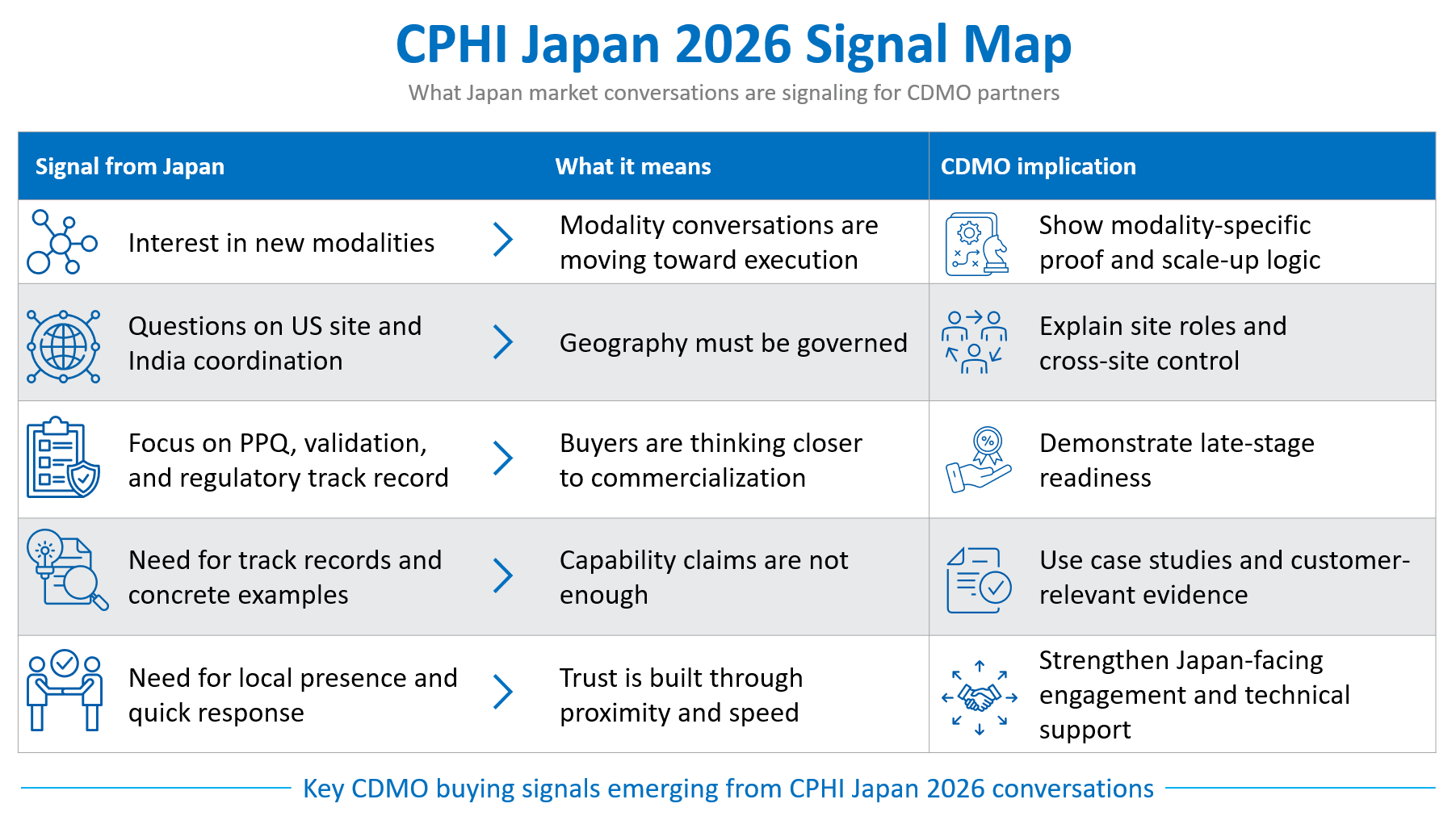
Figure 2. CPHI Japan 2026 showed that CDMO buying signals are moving from broad capability claims toward evidence, site clarity, late-stage readiness, and local confidence.
Japan’s CDMO selection criteria are now operational, not brochure-led
For Japan, trust is not created during supplier qualification; it should begin before that. This is a major implication for the CDMO strategy. A CDMO cannot wait for an RFP and then try to prove itself through a standard presentation. By that time, the sponsor has already formed assumptions about competence, quality, risk, and seriousness.
The stronger CDMO makes technical judgment visible earlier. It does this through case-based communication, senior scientific access, technical seminars, facility narratives, regulatory examples, practical problem-solving notes, and clear explanations of how risk is managed across the product life cycle. This is not about producing more material for customers. It is about giving sponsors enough technical and operational evidence to judge whether a partner can manage risk before formal supplier qualification begins.
The CPHI Japan inputs made this point more concrete. Customers asked what the Maryland site can do, what it manufactured earlier, what kind of facility it is, how many staff members are there, what upgrades are planned, and how the US site will coordinate with India. These are not brochure-level questions. They are operational questions. They show that customers want to understand the working system behind the footprint.
This is especially important for Indian CDMOs. If some Japanese customers carry doubts about Indian quality or technology, those doubts will not be removed by adjectives. “World-class,” “integrated,” “trusted,” and “high-quality” are not proof. They are claims. Proof looks different. It includes inspection history, named partnerships where possible, relevant case studies, global customer experience, cross-site quality systems, facility readiness, and examples of handling difficult development or manufacturing problems.
The narrative should not be “trust India.” That is too broad and too easy to dismiss. The stronger narrative is “verify the operating model.” Global customer experience, strong technical examples, and visible centers of excellence can help move the conversation from country perception to execution confidence.
A related question from the Japan interactions was sharper still: can India develop technology beyond generics, innovate independently, and handle time-sensitive development and manufacturing with the required management discipline? That question cannot be answered by a low-cost proposition. It needs case studies, timelines, quality records, technical depth, and visible program governance.
A global operating model needs local trust infrastructure
For Japanese sponsors, a global footprint matters only when it reduces risk in a visible way. Having sites across countries is useful, but it does not automatically create confidence. In fact, multiple sites can raise new questions around quality consistency, technology transfer, communication, and accountability.
This is why the stronger CDMO partner will be one that can localize confidence while executing globally. That means maintaining Japan-facing relationship continuity, enabling clear communication, involving senior technical leaders early, and explaining which geography is best suited for each stage of the asset. The point is to show how each site fits into a controlled, coherent development and manufacturing path.
A credible global CDMO should help the sponsor make the right risk-adjusted geography decision, rather than force a location-led argument.
The CPHI Japan feedback also shows that localization has a practical side. Japanese-language posters and brochures were effective. Local presence was strongly valued. Immediate response to technical and specialized questions was seen as important for moving opportunities forward. The lesson is simple: localization is not only about translation. It is about reducing the distance between the customer’s question and the CDMO’s answer.
Syngene’s acquisition of its first US biologics facility in Baltimore-Bayview is relevant in this context. Reuters reported that the acquisition would increase Syngene’s bioreactor capacity from 20,000 L to 50,000 L and support its large-molecule discovery, development, and manufacturing strategy. Syngene has also stated that the site expands its biologics footprint to serve customers across human and animal health segments.
For Japanese sponsors, such moves matter only if they are connected to a larger operating story: how quality travels across sites, how technology transfer is controlled, how documentation is harmonized, how teams communicate, and how customer risk is reduced. The footprint is useful only when the global operating model makes it reliable.
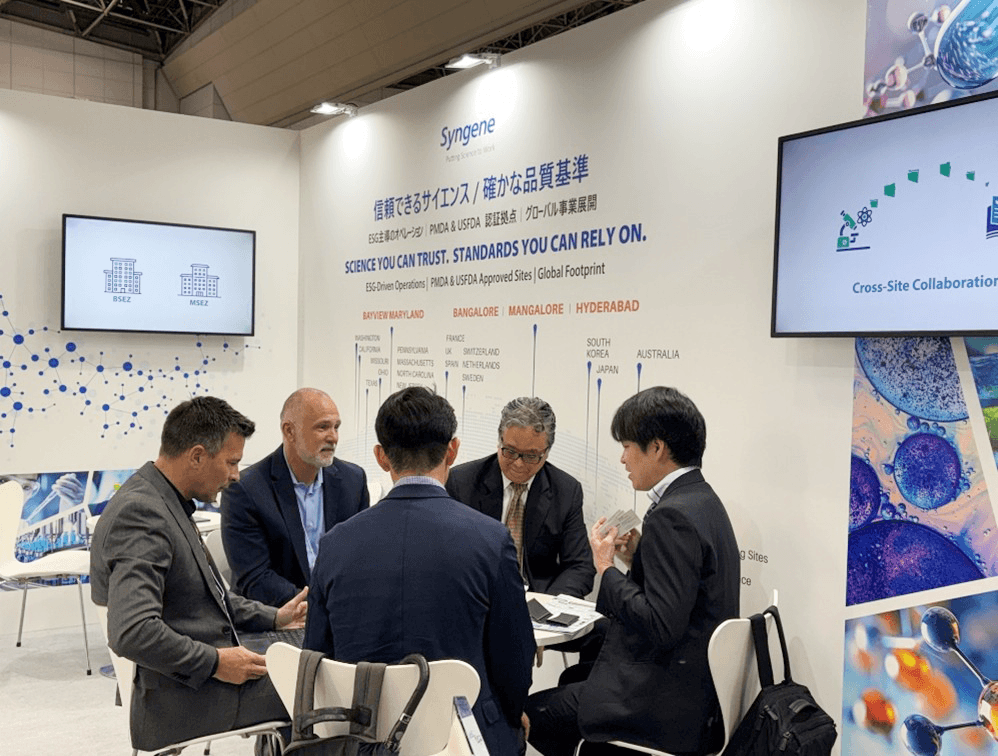
Figure 3. Customer conversations at CPHI Japan 2026 showed that CDMO selection is increasingly shaped by site clarity, technical response, and confidence in cross-geography execution.
Technical depth and practical intelligence will matter more than competitive noise
The CDMO market is becoming more crowded in complex modalities. Many companies now speak the same language: ADCs, peptides, oligos, HPAPIs, biologics, integrated development, global footprint, speed, quality, and partnership. This creates a problem for sponsors. When every CDMO says the same thing, the customer has to look for harder signals.
Generic claims about speed, quality, and partnership will blur into the market. Practical intelligence will stand out: what is changing, where the risk sits, what trade-offs matter, and how a partner can reduce uncertainty.
This is also where communication has to mature. The CPHI Japan feedback was clear that fact-based brochures should move toward success stories and case-study-led material. Track records and concrete examples matter because they show how a CDMO behaves when real development and manufacturing constraints appear.
This is why the CDMO role itself needs to be reframed. The next phase of CDMO growth in Japan will not be defined by who can take orders. It will be defined by who can share risk intelligently. This does not mean taking financial risk blindly. It means helping the sponsor identify, interpret, and reduce development and manufacturing risk before it becomes expensive. It means advising on manufacturability early. It means flagging analytical gaps before tech transfer. It means identifying containment or scale-up constraints before late-stage pressure builds. It means designing a realistic path from development to GMP and from GMP to commercial supply.
This is a more demanding role. It requires scientific confidence, project discipline, quality maturity, and commercial restraint. It also requires patience. Japan is not a market where trust can be rushed. Relationships compound through consistency.
For CDMOs, the strategic lesson is simple but difficult: do not sell capacity first, sell operating confidence. Operating confidence is what allows a sponsor to believe that a molecule can move across stages, sites, and teams without unnecessary loss of control. It is what turns a CDMO from a vendor into a development and manufacturing partner.
Conclusion
Japan’s CDMO opportunity is entering a more disciplined phase. Scale will matter. Capability will matter. Geography will matter. But none of these will be enough on its own. Supply chain diversification will matter only when it is backed by technical depth, site clarity, local engagement, and a credible global operating model.
The stronger partner will be the one that can help sponsors move complex assets across stages, sites, and functions without losing control. For global CDMOs, that is the real opportunity.
The strongest takeaway from CPHI Japan 2026 is that Japan’s CDMO market is not looking for more capability claims. It is looking for partners who can make their capabilities verifiable: through track records, site clarity, late-stage experience, technical response speed, local engagement, and a credible model for executing across geographies.