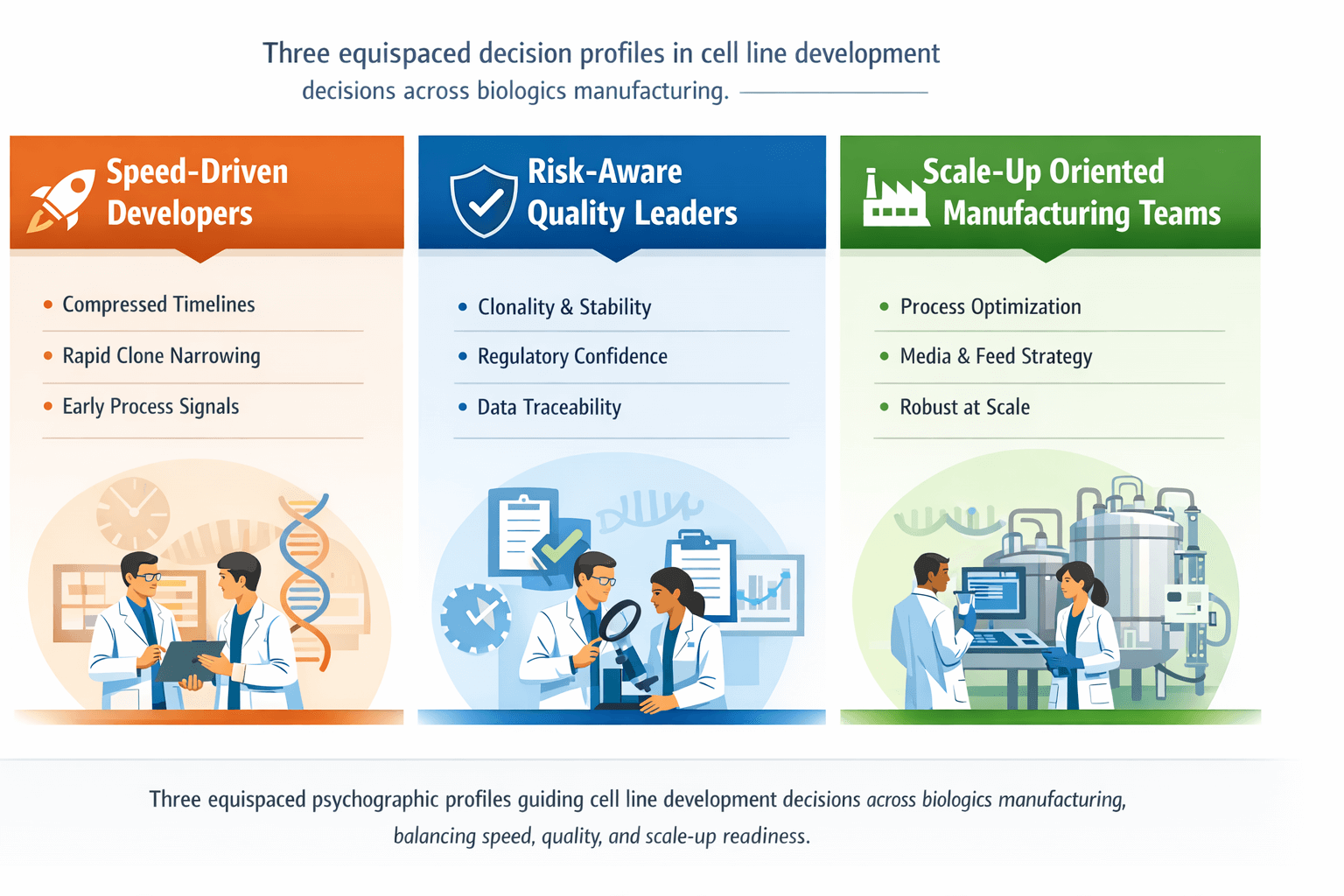








The animal health industry is entering a new era shaped by scientific innovation, rising expectations in companion animal care, and the increasing global emphasis on One Health. Cell line development has become a critical foundation as diseases in pets and livestock grow more complex and chronic, driving demand for smarter, more targeted therapies. At the forefront of this shift is the convergence of small molecule drug development and large molecule biologics—a multi-modality approach that is redefining modern veterinary therapeutics.
Animal health companies today face pressure to innovate quickly, differentiate effectively, and navigate tighter regulatory expectations. As a result, they are increasingly seeking partners who can offer integrated discovery, development, and manufacturing capabilities. Syngene’s unified platform, spanning small molecules, large molecules, biologics development, CMC readiness, cell line development, and veterinary drug development, provides the flexibility, speed, and scientific depth needed to address emerging therapeutic challenges.
Why Multi-Modality Innovation Matters in Modern Veterinary Medicine
For decades, small-molecule therapeutics have served as the foundation of veterinary pharmaceuticals. They remain indispensable due to advantages such as:
- High oral bioavailability
- Rapid onset of action
- Stability and ease of formulation
- Cost-efficient API manufacturing
These attributes make small molecules ideal for treating acute infections, parasitic diseases, metabolic disorders, and short-term pain.
However, as chronic and immune-mediated conditions such as arthritis, dermatological diseases, and inflammatory disorders increase, large molecule biologics are playing a growing role. Monoclonal antibodies, recombinant proteins, engineered peptides, and fusion proteins enable precise targeting of disease pathways, improving durability and consistency of response in veterinary therapeutics.
Biologics offer distinct advantages:
- Highly selective mechanism of action
- Long duration of effect
- Low off-target toxicity
- Strong therapeutic outcomes in chronic indications
Together, small and large molecules are creating a richer, more adaptable therapeutic toolbox for veterinarians and pet owners.
The Power of Combining Small and Large Molecules in Veterinary Drug Development
The real progress in modern veterinary drug development lies in combining chemical and biological approaches in a coordinated way. Syngene’s integrated infrastructure supports animal health companies in building cross-modal therapeutic strategies that improve efficacy, durability, and market differentiation.
1. Multi-layered treatment strategies
Small molecules offer rapid symptom relief or fast pathway modulation, while long-acting mAb therapies or peptides deliver sustained benefits. This layered approach ensures both immediate and long-term disease control, improving compliance and outcomes.
2. Unified research and development workflows
By integrating medicinal chemistry, in vitro biologics assays, recombinant protein expression, cell line development, and bioanalytical method development, Syngene eliminates scientific silos. Data flows seamlessly across teams, reducing risk and enabling faster, smarter decision-making.
3. Accelerated candidate selection
Combined insights from PK/PD modeling, ADME and veterinary DMPK studies, LC‑MS/MS, and SPR‑based binding characterization enable robust molecule ranking and early identification of promising therapeutic pathways.
4. Predictable manufacturing scale-up
With consolidated capabilities in GMP API synthesis and upstream/downstream biologics processing, Syngene supports smooth scale transitions—from discovery batches to clinical supplies.
Technical Trends Shaping the Future of Veterinary Therapeutics
1. The rise of monoclonal antibodies in veterinary medicine
mAbs are becoming a cornerstone for chronic pain, immune‑modulated disorders, and dermatological indications. As veterinary pipelines expand, demand is rising for mAb engineering, Fc optimization, protein purification, and bioassay development tailored to species-specific biology.
2. Growing adoption of peptide and protein-based drugs
Peptides offer high specificity with flexible molecular design. As stability and half-life engineering improve, the field is accelerating around solid‑phase peptide synthesis (SPPS), peptide formulation development, and stability optimization to enable next-generation veterinary therapeutics.
3. Increasing emphasis on regulatory-ready CMC
With biologics growth, regulatory expectations around impurity profiling, comparability studies, residue depletion studies, and validated analytical methods are becoming more stringent, making integrated veterinary CMC development essential.
4. Advanced analytics driving precision drug development
Technologies such as SEC‑MALS, capillary electrophoresis, cell-based potency assays, ELISA-based quantification, and comprehensive method validation are enabling better predictability and regulatory confidence.
Why Animal Health Companies Choose Syngene
As multi‑modality development becomes the norm, animal health innovators are seeking R&D partners who can operate across the full therapeutic spectrum. Syngene stands out because of its ability to integrate science, technology, and execution under one unified platform.
1. Comprehensive scientific capabilities
From hit‑to‑lead chemistry, lead optimization, and in vivo pharmacology to recombinant protein engineering, cell line development, bioanalytics, and GMP manufacturing, Syngene offers a single ecosystem that spans the entire molecule journey.
2. Faster, more efficient development timelines
Integrated workflows eliminate unnecessary handoffs, reduce rework, and speed up decision cycles—leading to faster progression from early discovery to IND‑enabling studies.
3. Scalable manufacturing infrastructure
With strong capabilities in API scale-up, biologics process development, analytical validation, and formulation development, Syngene supports clients through clinical and pre-commercial supply needs.
4. High-quality, regulatory-aligned systems
Syngene’s global‑standard quality frameworks ensure robust data integrity, documentation excellence, and audit-ready processes across modalities.
5. A collaborative, innovation-driven culture
Syngene’s scientists partner deeply with clients—anticipating risks, proposing alternative strategies, and co-creating cutting-edge therapeutic pathways.
Conclusion
The future of animal health is multi-modal, data-driven, and precision-oriented. By uniting small molecule innovation with the power of large molecule biologics, the animal health industry is poised to deliver safer, more effective, and longer-lasting therapies. With its integrated scientific ecosystem and proven track record in supporting complex, cross-modal programs, Syngene is uniquely positioned to help animal health companies bring the next generation of veterinary therapeutics to life—faster, smarter, and with greater confidence.