



Proteolysis-targeting chimeras (PROTACs) and other protein degradation strategies are gaining increasing prominence due to the benefits they offer over small molecules in drug discovery for challenging targets. These include the ability of PROTAC molecules to selectively target proteins for degradation, their potential for sustained action, and low dosages required for degradation.
However, PROTACs differ from small molecules in various ways. These include:
- Lack of regulatory guidelines (FDA, ICH) for developing PROTAC drugs
- Most protein degraders do not follow Lipinski’s* rule of five which is generally considered important in order to assess the drug likeness of a compound. Therefore, these guidelines often fail to be predictive for heterobifunctional molecules.
- Poor permeability, resulting in poor druggability
- Tendency to form binary rather than ternary complexes at higher concentrations – also known as the “hook effect”
- Competitive binding of PROTAC metabolites
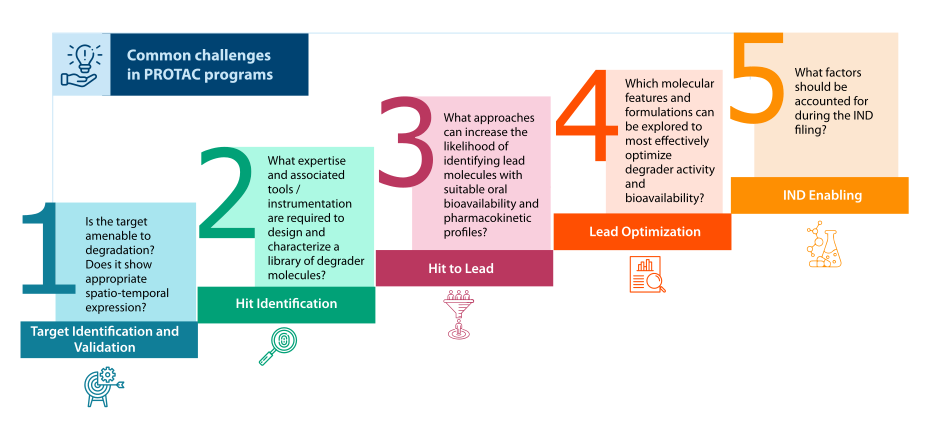
Strategically, there are five questions that need to be addressed when launching a PROTAC development program.
- Is the target amenable to degradation, and does it show appropriate spatiotemporal expression?
- What expertise and associated tools/instrumentation are required to design and characterize a library of degrader molecules?
- What approaches can increase the likelihood of identifying lead molecules with suitable oral bioavailability and pharmacokinetic profiles?
- Which molecular features can be explored to most effectively optimize degrader activity?
- What factors should be accounted for during the IND filing?
With demonstrated expertise across the PROTAC discovery and development process, we have the capability to be your partner for all TPD research elements, including both heterobifunctional degraders and molecular glues. With 450+ dedicated TPD scientists and more than 15 global clients, we have a strong track record in accelerating PROTAC programs for our clients.
Given below is our comprehensive PROTAC toolbox that supports clients in advancing their PROTAC programs.
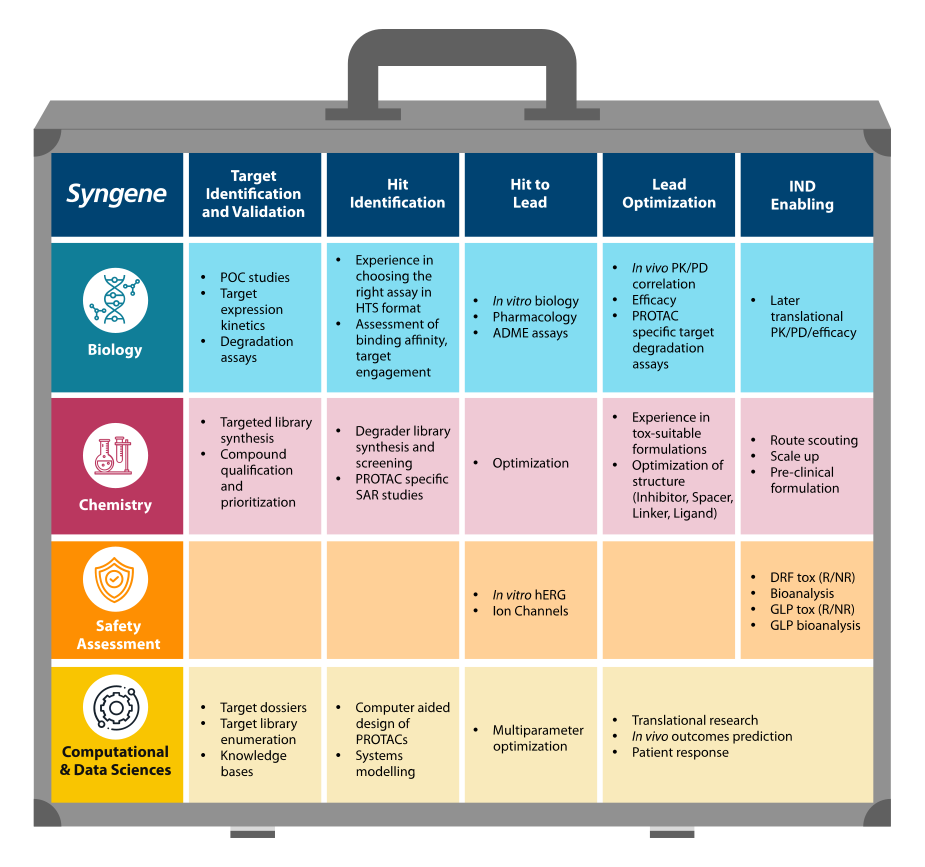
Syngene’s PROTAC toolbox
*Lipinsky’s rule of five – no more than 5 hydrogen bond donors, no more than 10 hydrogen bond acceptors, a molecular mass of less than 500 daltons and an octanol-water partition coefficient (log P) that does not exceed 5