SynVent is Syngene’s platform for fully integrated therapeutic discovery and development across large and small molecules.
Emerging biopharma work at the forefront of science, often venturing into disease areas where little or no real-world data exists to work with or regulatory frameworks to work within.
Our Dedicated Centers offer dedicated multi-disciplinary scientific teams, support personnel, and a tailormade ring-fenced and fire-walled infrastructure as per client specifications to support their R&D goals

Centre for Advanced Protein Studies [CAPS] is a state-of-the-art advanced national facility located in the Syngene campus, Bangalore.

In recent years, the biopharmaceutical industry has increasingly focused on reducing animal testing when conducting safety and efficacy studies for new drugs. Ethical considerations, regulatory guidelines, and advancements in alternative testing methods like artificial intelligence have driven this shift. However, certain studies, such as bile duct cannulated (BDC) studies on rats remain unavoidable as they are crucial for understanding the pharmacokinetic profile of drugs, particularly their absorption, distribution, metabolism, and excretion (ADME).
BDC studies are essential for evaluating biliary clearance as they play a significant role in drug excretion. This is especially true for compounds undergoing extensive hepatic metabolism. By conducting these studies appropriately, biopharma companies can minimize the number of animals used in conformance with regulatory guidelines that emphasize animal welfare and safety. Precisely designed and executed BDC studies not only provide valuable insights into drug behavior but also align with the industry’s commitment to ethical research practices.
In this playbook, we provide a step-by-step account of how to conduct bile duct cannulated studies in rats, safely and successfully.
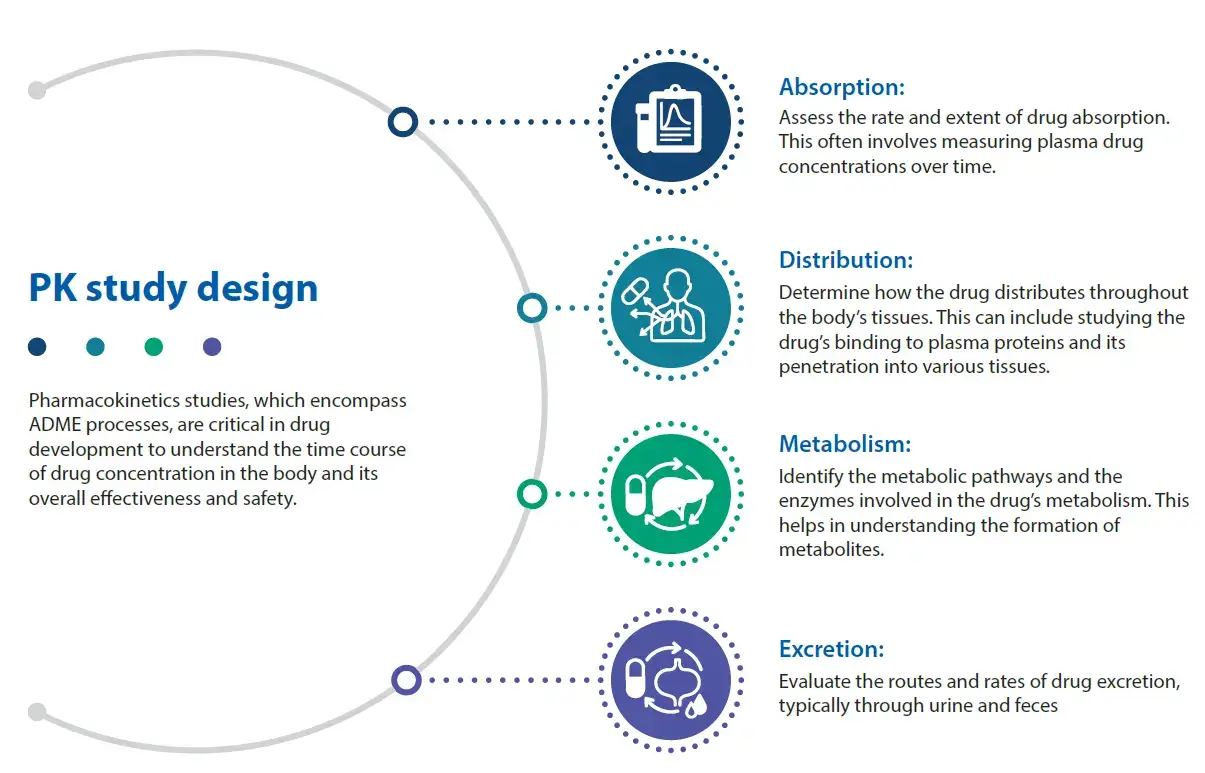
Pharmacokinetics studies, which encompass ADME processes, are critical in drug development to understand the time course of drug concentration in the body and its overall effectiveness and safety.
Excretion is the process of removing a drug and its metabolites from the body, primarily through urine and feces. The kidneys and liver play significant roles in this process.

Bile is produced by the liver, which helps in the digestion of fat and the elimination of drugs and metabolites. Hepatic metabolism is an essential determinant of drug clearance, bioavailability, and excretion. Hepatic drug disposition depends upon organ perfusion rate, protein binding, the activity of drug-metabolizing enzymes, and excretion processes. Rats are the first choice of preclinical species used to characterize drug clearance, bioavailability, and excretion profile of new chemical entities/drugs. Rats are an ideal model for examining biliary drug disposition as they lack gallbladders, and the bile duct can be cannulated for bile collection.
Biliary clearance is an important aspect of drug excretion, particularly for compounds that undergo significant hepatic metabolism. Bile clearance involves the secretion of drugs and their metabolites into the bile, which is then excreted into the intestine and eliminated from the body.
Factors Influencing bile clearance
Understanding bile clearance helps in predicting the overall elimination of the drug and potential drug-drug interactions.
Before beginning a bile duct cannulation (BDC) study, it is essential to consider whether this type of study is the best way to answer scientific questions on drug movement. If yes, one needs to think about how to design the study, including which sex and strain of animals to use and what doses to test.
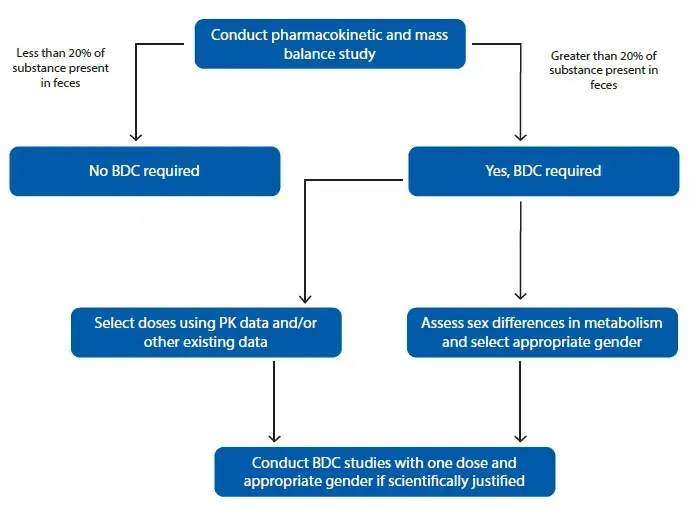
Given below is a decision tree process to help decide whether a BDC study is required or not:
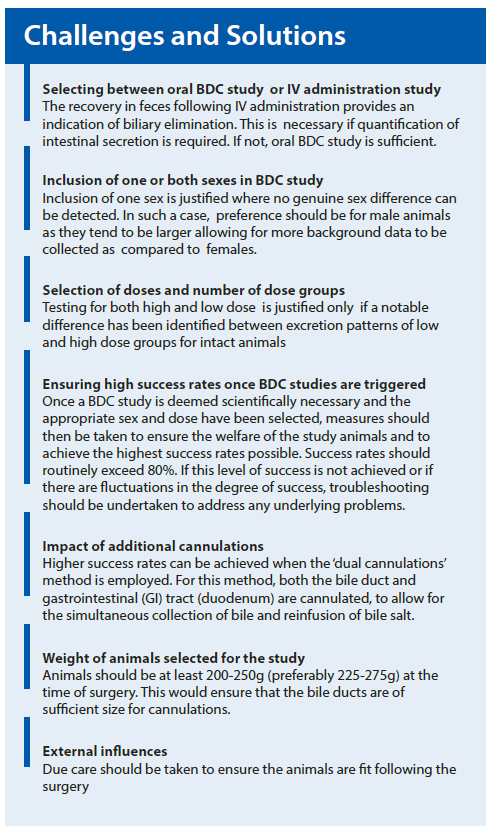
The recovery in feces following IV administration provides an indication of biliary elimination. This is necessary if quantication of intestinal secretion is required. If not, oral BDC study is sucient.
Inclusion of one sex is justifed where no genuine sex difference can be detected. In such a case, preference should be for male animals as they tend to be larger allowing for more background data to be collected as compared to females.
Testing for both high and low dose is justifed only if a notable difference has been identifed between excretion patterns of low and high dose groups for intact animals
Once a BDC study is deemed scientifically necessary and the appropriate sex and dose have been selected, measures should then be taken to ensure the welfare of the study animals and to achieve the highest success rates possible. Success rates should routinely exceed 80%. If this level of success is not achieved or if there are fluctuations in the degree of success, troubleshooting should be undertaken to address any underlying problems.
Higher success rates can be achieved when the ‘dual cannulations’ method is employed. For this method, both the bile duct and gastrointestinal (GI) tract (duodenum) are cannulated, to allow for the simultaneous collection of bile and reinfusion of bile salt.
Animals should be at least 200-250g (preferably 225-275g) at the time of surgery. This would ensure that the bile ducts are of sucient size for cannulations.
Due care should be taken to ensure the animals are fit following the surgery
Surgical facility and personnel
Surgical techniques
Cannula positioning
Cannula and catheter considerations
Anesthesia and analgesia
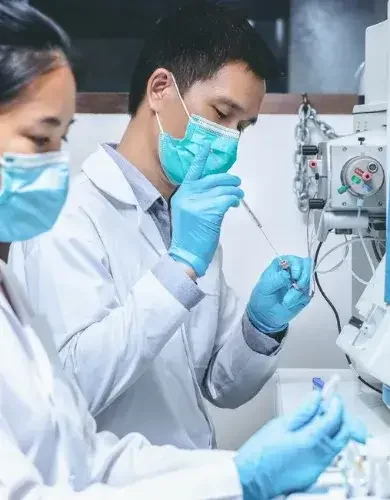
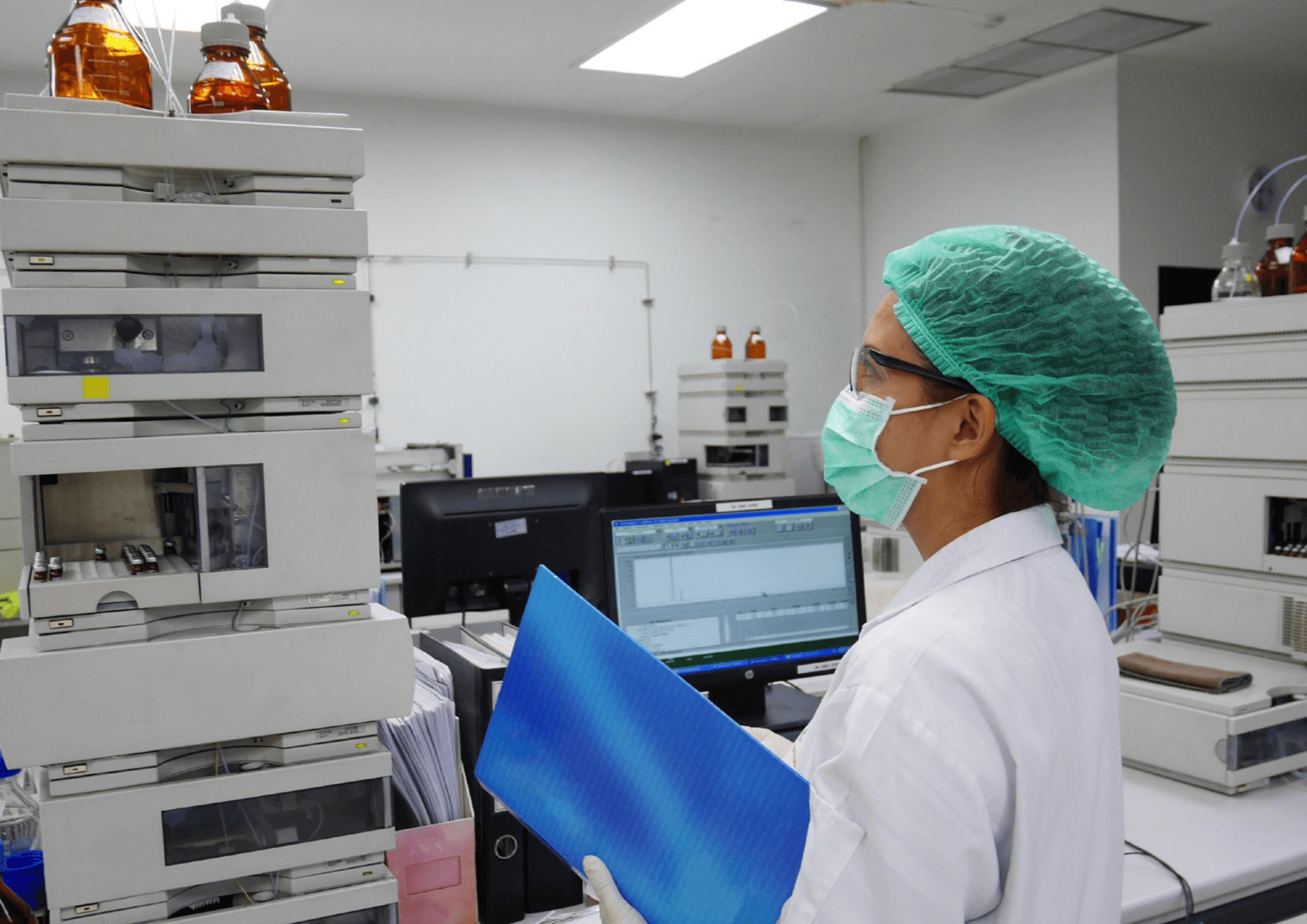
Our BDC studies involve collecting bile from animals at predetermined time points during or after substance administration. These studies are technically complex and require skilled surgeons.
Our scientists can assess the pharmacokinetic profile (ADME) in rats by administering substances either orally or intravenously (IV). If more than 20% of the substance is found in feces after oral dosing, biliary excretion is measured to determine absorption. This is particularly useful for substances that cannot be given intravenously due to formulation issues like low solubility.
Preparation and techniques
Cannula patency
Failure of cannula patency can result in insufficient data, potentially necessitating study repetition.
Study assessment
Study recommendations
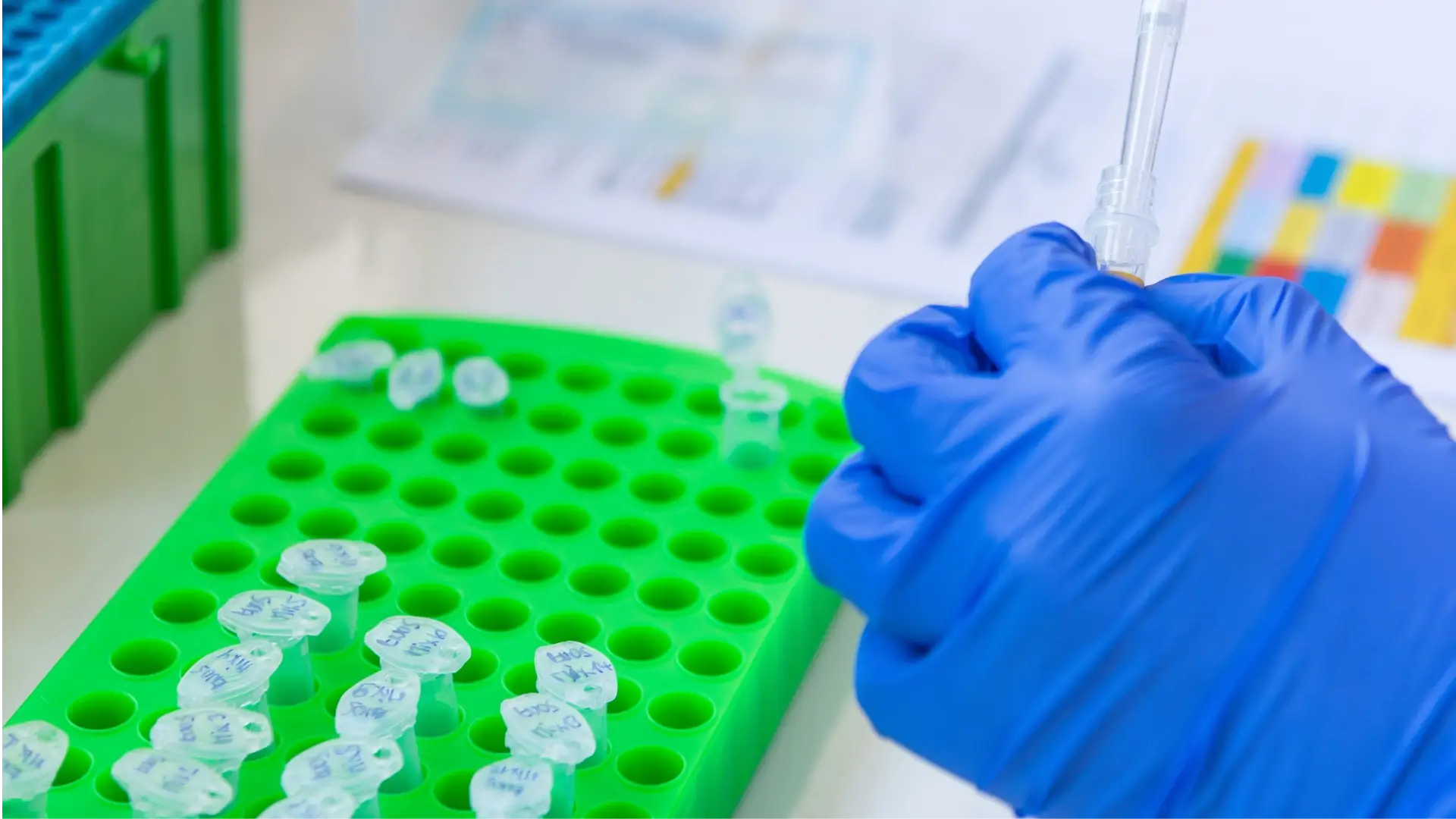
To quantify the unchanged parent molecules eliminated in bile, urine, and feces after IV and Oral administration in rats and to monitor the putative metabolites in these excretions to understand the metabolite fate of the molecule.
Our team conducted a BDC study in rats, which involved:
The BDC study successfully quantified the unchanged parent molecules in plasma, bile, urine, and feces. The tested compound showed low biliary and renal excretion, with the percentage of dose excreted in bile and urine being less than 2% after IV and oral administration. Calculated renal clearance and bile clearance after IV administration of the tested compound were 0.12 ml/min/kg and 0.21 mL/min/kg, respectively. The tested compound showed higher recoveries in feces, with 10.3% of the dose unchanged after IV administration and 73% of the dose unchanged after oral administration.
This provided a comprehensive understanding of the drug’s excretion profile using different metrics. By conducting the study with precision, we ensured high-quality data while adhering to regulatory guidelines for animal safety and welfare. Further, this approach minimized the number of animals used, aligning with the industry’s commitment to ethical research practices.
Extensive experience
We have 10+ years of experience in conducting dual BDC studies, with approximately 20 studies (100 surgeries) completed in a year.
High success rates
Skilled personnel
Advanced techniques
Customized solutions
Comprehensive support
Innovative approaches
BDC studies remain a critical component of understanding the elimination profiles of new drugs. These studies provide invaluable insights into drug metabolism and excretion, particularly for compounds undergoing significant hepatic metabolism. By conducting BDC studies with precision and care, biopharma companies can ensure they gather essential data while minimizing the use of animals.
Syngene is committed to conducting BDC studies safely and effectively to ensure high success rates while adhering to the highest standards of animal welfare and safety. Our approach includes utilizing skilled surgeons and advanced surgical techniques to perform bile duct cannulation, implementing meticulous sample collection and analytical methods to ensure reliable data, and following regulatory guidelines. By partnering with us, biopharma companies can obtain critical PK data for drug development without compromising on animal safety and welfare.

Vishwottam has around 25 years of hands-on experience in discovering 40+ drug targets across various therapeutic modalities encompassing small molecules, PROTACs, ADCs, and Peptides. He has assisted in lead discovery and optimization of 13+ NCEs from bench to bedside and is recognized as a key contributor in 13 US patents. He has published more than 90 original research and reviews in journals and presented more than 100 scientific posters at 50+ global scientific conferences.

Amol has around 24 years of experience in providing DMPK support to research programs for more than 30 therapeutic targets. These are across various therapeutic areas and drug modalities like small molecules, large molecules, PROTACs, ADCs, molecular glues, and peptides. As a key contributor, he has successfully led the discovery and optimization of 2 NCEs from bench to Phase-3 clinical trials, besides being an active member of a team that nominated five clinical candidates for early clinical trials. Amol is interested in translational research, including herb-drug/drug interactions and human PK and dose projections.

Pankaj leads a team focused on pharmacokinetic studies, contributing to the development of new drugs by designing and performing bioavailability and toxicokinetic studies in various preclinical species. His role involves significant expertise in surgical techniques and the use of advanced software tools for data analysis.
Share a few details and our team will reach out to explore how we can support your goals.