






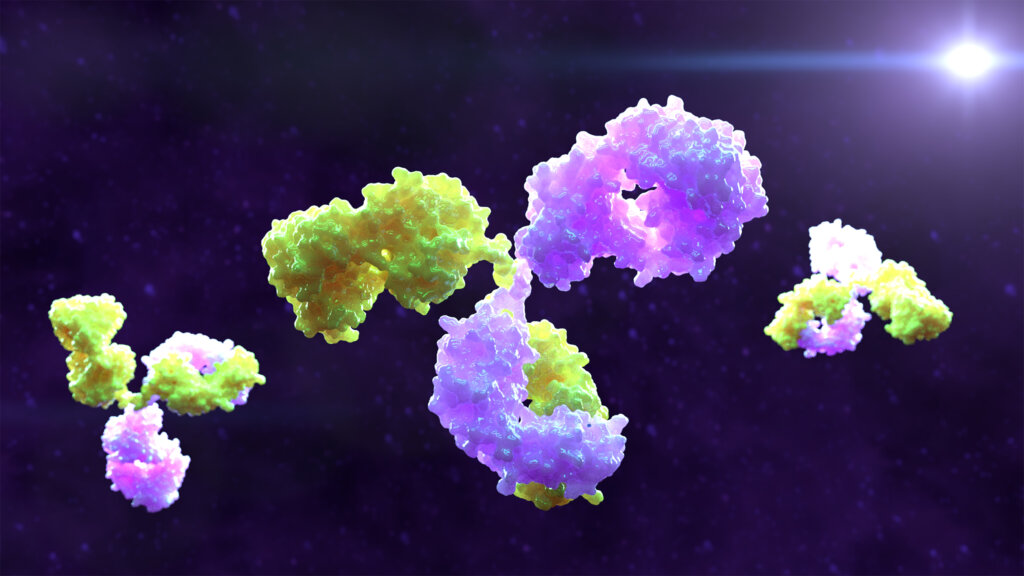
Bispecific antibodies have moved from niche concept to a mainstream therapeutic class, with programs advancing across oncology, immunology, and infectious disease. By binding two distinct epitopes or targets at once, bispecific antibodies can redirect immune cells, block compensatory pathways, or co-engage receptors to tune signaling with precision. For drug developers, the central challenge is to convert sophisticated biology into molecules that are stable, manufacturable, and clinically predictable.
Why bispecific antibodies matter in modern biologics
Conventional monoclonal antibodies act on a single target, which is powerful but sometimes insufficient in complex networks. Bispecific antibodies can overcome adaptive resistance, for example by neutralizing a ligand and its receptor together, or by co-inhibiting parallel pathways. In T cell redirection, a bispecific engages CD3 on T cells and a tumor antigen on cancer cells to create close contact that promotes cytolysis. In receptor clustering, simultaneous binding can either activate or silence signaling in a context dependent way. These mechanisms are attractive; however they push the boundaries of protein engineering, analytics, and control strategies. The goal is simple to state, selectivity with the right potency and exposure, yet success depends on format choice and end to end development discipline.
Bispecific antibody formats, design choices and trade offs
Choosing among bispecific antibody formats is a first order decision. IgG like designs preserve Fc function, which supports half life and enables Fc mediated effector mechanisms when desired. Fragment based formats aim for small size and rapid tissue penetration, which can be useful for certain solid tumors or when short exposure is preferred.
IgG-like formats
Knobs into holes, common light chain, and CrossMab strategies maintain an IgG scaffold while imposing pairing rules that prevent misassembly. These designs support standard upstream and downstream unit operations, which lowers the barrier for scale up. Fc engineering can tune effector function, for example silencing to reduce cytotoxicity or preserving activity for natural killer cell engagement. The trade off is higher molecular weight, which can limit penetration into dense tissue and sometimes increases viscosity at formulation strength.
Fragment based and T cell engaging constructs
BiTE like constructs and other fragment based bispecific antibodies remove the Fc region to achieve small size and rapid diffusion. These formats carry benefits in certain tumor microenvironments; however, they often require continuous infusion or frequent dosing due to faster clearance. Stabilizing linkers, sequence optimization to reduce aggregation, and long acting half life extension modules can mitigate these issues. When these molecules redirect T cells, the therapeutic window is sensitive to target density and binding kinetics, so early modeling and careful dose exploration are essential.
Practical considerations in bispecific antibody engineering
Developability and manufacturability
Bispecific antibody engineering must start with developability screens. Early biophysical triage, including thermal and colloidal stability, viscosity prediction, and forced degradation studies, helps de-risk late surprises. Sequence liabilities, such as deamidation sites or hydrophobic patches, should be addressed before lead nomination. Expression should be tested with the intended cell system since assembly challenges for heterodimers can be cell line specific. Upstream, platform media and feeds can be adapted with minimal changes, while chain balance and signal peptide selection may be tailored to ensure correct pairing. Downstream, Protein A capture is feasible for most IgG-like bispecific antibodies, followed by polishing that removes homodimers and mispaired species. Multimodal resins, cation exchange, and hydrophobic interaction steps are frequently combined to meet purity specifications at practical yield.
Analytics and release
Analytics must discriminate the intended species from process-related variants with high confidence. Intact mass and peptide mapping confirm correct assembly, while multi-attribute methods track sequence variants through the process. Orthogonal charge, size, and hydrophobicity methods ensure that product quality is consistent over time. Target binding is confirmed in parallel assays to verify simultaneous engagement. For T cell redirecting bispecific antibodies, cell-based potency that reflects synapse formation and cytolysis is critical. Stability studies should stress temperature, light, agitation, and freeze-thaw to define an appropriate control strategy for shipping and storage.
Bispecific antibody development with a CDMO mindset
A CDMO perspective brings discipline to bispecific antibodies. Early definition of the target product profile guides engineering and bioassay design. Material generation should follow stage gates, feasibility lots to select a path, engineering lots to lock the process, and then GMP at pilot scale. Comparability is a constant theme, so raw material standards, mixing sequences, and residence times should be documented and reproducible. Process analytical technology can monitor critical parameters and reduce batch-to-batch variability. When clinical demand increases, scale transition is best handled by maintaining shear environment and residence time similarity rather than only matching volumetric ratios.
Upstream and downstream process notes
For IgG like bispecific antibodies, fed batch is the reliable starting choice. Perfusion can be considered when very high productivity or space time yield is required. The toughest purification task is removing mispaired species. Sequential cation exchange with center cut pooling, or mixed mode chromatography adjusted to capture off target variants, usually gives consistent purity at a workable yield. For viral safety, the standard approach applies, a low pH hold for inactivation and a validated virus retentive filter, supported by strong virus clearance studies.
Stability, comparability, and control strategy
Formulation screens should emphasize isotonicity, pH selectivity, and surfactant selection that limits interface stress. Viscosity increases rapidly above one hundred milligrams per milliliter for some bispecific antibodies, so subcutaneous delivery strength may need careful excipient design or co-formulation strategies. Comparability protocols, both analytical and functional, are essential when scale, site, or equipment changes occur.
Regulatory perspective for bispecific antibodies
Global regulators expect the same quality principles that apply to monoclonal antibodies; however, certain topics deserve extra attention. The mechanism of action must be well supported because dual binding introduces complex pharmacology. Potency methods should be mechanism-relevant and stable over time. Safety pharmacology should consider cytokine release risk, with the starting dose derived from the minimal anticipated biological effect rather than the no-observed-adverse-effect level. For manufacturing, the control strategy must address mispaired species that may have residual activity. A quality-by-design approach, linking critical quality attributes to critical process parameters, will support efficient scale-up and technology transfer. The result is a program that withstands inspections and moves faster through clinical development.
Common pitfalls to avoid
Developability work needs to be front-loaded. Sequences should be screened for liabilities, thermal and colloidal stability should be confirmed, and viscosity at the intended fill strength needs to be estimated. Risky motifs are to be corrected before lead nomination so that timelines remain realistic.
Functional comparability should be established whenever any process or sequence change is introduced. Orthogonal analytics and mechanism-relevant bioassays are to be used to show that binding, potency, and dual target engagement remain within limits.
Variant control needs to be built into purification. Homodimers, half antibodies, and mispaired species are to be expected; therefore, capture should be followed by selective polishing, and clearance is to be validated across operating ranges, not only at the centre point.
The control strategy is to be strengthened and kept current. Critical quality attributes should be linked to critical process parameters, process analytical technology needs to be applied where feasible, raw material specifications and change control are to be maintained completely, and a clear comparability plan should be in place for scale, site, and equipment moves.
Summary
Bispecific antibodies unite complex biology with practical engineering. Careful selection among bispecific antibody formats, strong developability screens, a disciplined process with targeted analytics, and a clear control strategy convert sophisticated design into manufacturable and stable products. With these foundations, bispecific antibodies advance from elegant concept to reliable clinical candidates.