






Global pharmaceutical supply chains are under sustained pressure from rising regulatory expectations, complex molecules, and frequent disruptions across geographies. For manufacturers handling highly potent active pharmaceutical ingredients (HPAPIs), the challenge is more pronounced. HPAPI containment and batch reliability have become central to conversations on how supply chains can remain resilient without compromising safety, compliance, or timelines. In this context, improving supply chain resilience extends beyond logistics or sourcing strategies. It is deeply linked to how HPAPIs are contained, processed, and released consistently across batches and sites.
Why HPAPI containment matters for supply chain resilience
HPAPIs are essential for oncology, hormone therapies, and targeted treatments, but their potency brings inherent risks. Even trace exposure can pose serious health hazards to operators and contamination risks to adjacent processes. As a result, regulators expect robust containment strategies that are validated, monitored, and reproducible.
From a supply chain perspective, containment failures translate directly into downtime, batch rejections, and delayed releases. A single breach can trigger investigations, requalification, and regulatory scrutiny, affecting not just one batch but an entire manufacturing schedule. Strong HPAPI containment, therefore, acts as a risk control lever that stabilizes operations and protects supply continuity.
Batch reliability as a cornerstone of global manufacturing
Batch reliability refers to the ability to deliver consistent quality, yield, and release outcomes across repeated manufacturing runs. In HPAPI manufacturing, variability can arise from material handling, equipment interfaces, cleaning effectiveness, or environmental controls.
Unreliable batches disrupt supply chains in subtle but costly ways. Reprocessing, extended testing, or delayed batch disposition can cascade into shortages downstream, especially for products with limited manufacturing sites. Strengthening batch reliability helps reduce uncertainty and allows supply planners to work with predictable timelines rather than buffers built on caution.
Engineering controls and secondary containment
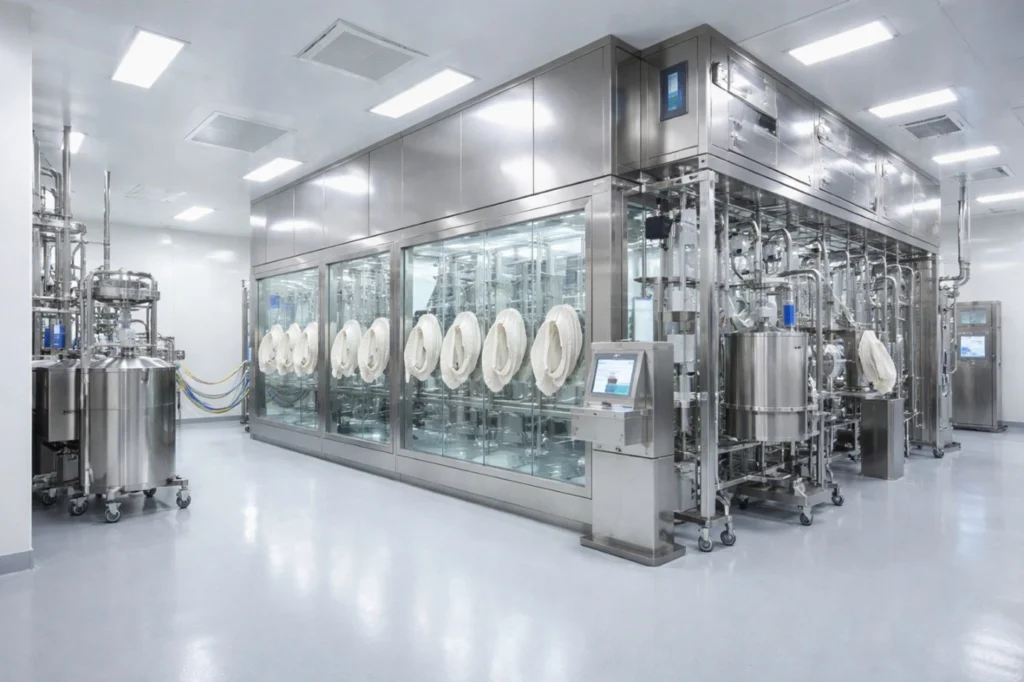
Modern HPAPI facilities rely heavily on engineering controls to ensure operator safety and process integrity. Isolators, glove boxes, and contained transfer systems form the first layer of defence. These systems are designed to maintain exposure levels well below occupational exposure limits while supporting routine operations such as charging, sampling, and filtration, drying and packing.
Secondary containment, including pressure cascades, dedicated HVAC zoning, and controlled waste handling, adds another layer of protection. Together, these measures reduce the likelihood of cross-contamination and unplanned shutdowns. When containment systems are designed with scalability in mind, they also support smooth transitions from clinical to commercial manufacturing, a frequent stress point in global supply chains.
Containment validation and regulatory expectations
Regulatory agencies expect containment strategies to be scientifically justified and continuously verified. This includes surrogate testing, operator exposure monitoring, and cleaning validation tailored to high potency compounds. Inconsistent or poorly documented containment validation can delay approvals or trigger observations during inspections.
Strong documentation practices and data integrity controls help demonstrate that containment performance is not a one-time achievement but a sustained capability. This assurance is critical when manufacturing networks span multiple regions and must meet harmonized regulatory expectations.
Process design and its impact on batch consistency

Process design choices made early in development have long-term implications for batch reliability. Simplified unit operations, closed material flows, and robust control strategies reduce operator intervention and variability. For HPAPIs, minimizing manual handling is not just a safety measure but a quality enabler.
Well-designed processes also allow smoother technology transfer between sites. When scale-up or site transfer is required, standardized containment approaches and clear process parameters reduce the risk of batch failures during transition phases. This directly supports supply chain resilience by enabling flexibility without loss of control.
Digital monitoring and real-time oversight
Digital tools are increasingly used to strengthen both containment and batch reliability. Real-time monitoring of pressure differentials, airflow, and equipment status provides early warning of deviations before they escalate. Integrated batch records and environmental monitoring systems support faster investigations and informed decision-making.
For global operations, digital visibility allows teams to compare performance across sites and identify emerging risks. This transparency supports proactive interventions rather than reactive responses, helping maintain a consistent supply even under changing conditions.
Workforce training and operational discipline
Technology alone cannot guarantee resilient HPAPI manufacturing. Operator training and procedural discipline play a critical role in sustaining containment performance. Regular training on gowning, equipment use, and deviation response helps maintain consistent execution across shifts and sites.
Clear standard operating procedures, supported by periodic audits, reinforce expected behaviours. When teams understand how their actions affect both safety and supply reliability, adherence improves naturally. Over time, this builds a culture where containment and batch reliability are treated as shared responsibilities rather than compliance tasks.
Linking containment strategy to business continuity
Supply chain resilience is ultimately a business outcome. Effective HPAPI containment reduces the likelihood of costly incidents, protects manufacturing capacity, and supports predictable delivery schedules. Batch reliability strengthens customer confidence by ensuring that commitments can be met without last-minute adjustments.
For companies operating in competitive and regulated markets, these capabilities provide strategic flexibility. They allow rapid response to demand changes, smoother regulatory interactions, and reduced reliance on single sites. In this way, containment and reliability move beyond technical concerns and become integral to long-term manufacturing strategy.
Building resilient HPAPI supply chains
Improving supply chain resilience in HPAPI manufacturing requires an integrated approach. Containment systems must be designed for safety and scalability, processes must be robust and transferable, and digital tools must support visibility and control. When these elements work together, batch reliability becomes a predictable outcome rather than an aspirational goal.
As global pharmaceutical manufacturing continues to evolve, organizations that align HPAPI containment with supply chain thinking will be better positioned to manage risk and deliver continuity. The result is a manufacturing network that is not only compliant but also resilient in the face of ongoing change.